



Excavator Hydraulic Thumb Bucket
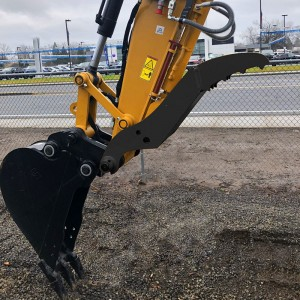
The Excavator Hydraulic Thumb Bucket is a hybrid hydraulic attachment that combines the digging capability of a standard excavator bucket with a movable "thumb" (hydraulic clamp arm). Unlike independent grabs or fixed buckets, it integrates both tools into one unit—enabling excavators to not only dig soil, sand, or gravel but also securely grip irregularly shaped materials such as rocks, tree stumps, concrete debris, and logs. This dual-function design makes it a versatile tool in industries like landscaping, construction, forestry, and demolition. By leveraging the excavator’s hydraulic system, the thumb delivers adjustable clamping force (30–200 kN) to hold materials in the bucket, replacing the need to switch between buckets and grabs—significantly improving operational efficiency and reducing tool change time.1. General Definition and Core Function
The Excavator Hydraulic Thumb Bucket is a hybrid hydraulic attachment that combines the digging capability of a standard excavator bucket with a movable "thumb" (hydraulic clamp arm). Unlike independent grabs or fixed buckets, it integrates both tools into one unit—enabling excavators to not only dig soil, sand, or gravel but also securely grip irregularly shaped materials such as rocks, tree stumps, concrete debris, and logs. This dual-function design makes it a versatile tool in industries like landscaping, construction, forestry, and demolition. By leveraging the excavator’s hydraulic system, the thumb delivers adjustable clamping force (30–200 kN) to hold materials in the bucket, replacing the need to switch between buckets and grabs—significantly improving operational efficiency and reducing tool change time.
2. Key Structural Components
2.1 Bucket Body (Digging Base)
Material and Durability: The bucket shell is constructed from high-strength wear-resistant steel (AR400/AR500 for the cutting edge; Q355B for the main body), with a Brinell hardness of 400–500 HB for the cutting edge—ensuring resistance to abrasion when digging hard soil or gravel. The bucket bottom and side plates are reinforced with ribbed steel (thickness: 8–16 mm) to withstand impact from rocks or debris, extending the bucket’s service life to 2,500–3,500 operating hours.
Design Features: Available in standard digging profiles (for general soil) or heavy-duty profiles (for rocks). The cutting edge is equipped with replaceable bucket teeth (alloy steel 20CrMnTi) via bolted connections—replacing worn teeth takes 5–10 minutes per tooth. The bucket capacity ranges from 0.3 m³ (for mini-excavators: 1–5 tons) to 2.5 m³ (for mid-sized excavators: 15–25 tons), with a backhoe angle of 45°–60° to optimize digging force.
2.2 Hydraulic Thumb Mechanism (Clamping Arm)
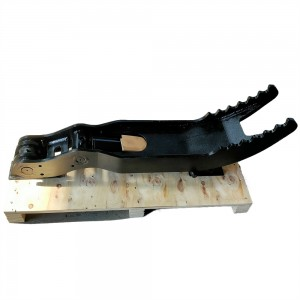
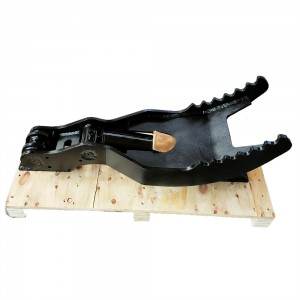
Thumb Structure and Material: The thumb is a curved or straight steel arm (1–3 fingers, depending on bucket size) made of high-strength alloy steel (40CrNiMoA), with a surface hardness of HRC 42–48. The inner side of the thumb is designed with "serrated anti-slip pads" (tooth height: 10–15 mm) to increase friction with materials—preventing slippage when gripping round logs or smooth rocks. For heavy-duty models, the thumb tip is welded with tungsten carbide blocks to enhance wear resistance when handling sharp debris.
Hydraulic Actuation: Driven by a single hydraulic cylinder (bore diameter: 50–120 mm; stroke: 150–300 mm) mounted on the bucket’s back plate. The cylinder barrel is made of 27SiMn seamless steel, and the piston rod is chrome-plated (plating thickness ≥0.05 mm) to resist corrosion. Operating at a working pressure of 20–30 MPa, the cylinder generates a clamping force of 30–200 kN—for example, a 10-ton excavator-mounted thumb bucket can produce 80 kN of force, securely holding a 3-ton rock in the bucket.
2.3 Connection and Rotation Components
Bucket-Thumb Hinge: The thumb is connected to the bucket via a high-strength pivot pin (diameter: 30–60 mm) made of 40Cr steel (heat-treated to HRC 35–40). The hinge is equipped with wear-resistant bushings (bronze or composite materials) to reduce friction—requiring only monthly greasing to maintain smooth movement.
Excavator Mounting Interface: Designed to match the excavator’s standard bucket linkage (pin-on or quick-coupler). The mounting lugs are made of thickened steel (16–25 mm) and precision-drilled to ensure alignment with the excavator’s arm—reducing vibration during digging or clamping. For quick-coupler compatibility, the mounting plate is adapted to ISO 13031 or OEM standards, enabling tool changes in 5–8 minutes.
2.4 Hydraulic Control System
Hydraulic Pipeline: Uses high-pressure rubber hoses (DN16–DN25) with a working pressure of 35 MPa, covered with a nylon wear-resistant sleeve to resist damage from rocks or branches. The pipeline connects the thumb cylinder to the excavator’s auxiliary hydraulic circuit—requiring no modification to the excavator’s main hydraulic system (simply plugging into the auxiliary valve).
Control Valve: Integrated with a "one-way check valve" to prevent the thumb from opening accidentally due to hydraulic pressure loss (e.g., hose leakage). Some models add a "flow control valve" to adjust the thumb’s clamping speed (50–100 mm/s)—slower for delicate tasks (e.g., gripping small trees) and faster for heavy-duty work (e.g., holding rocks).
3. Working Principle
3.1 Hydraulic Power Transmission
The excavator’s auxiliary hydraulic pump supplies high-pressure oil (20–30 MPa) to the thumb cylinder via the control valve. The operator controls the oil flow direction using a dedicated lever in the cab: pushing the lever forward sends oil to the rodless cavity of the cylinder, extending the piston and closing the thumb toward the bucket; pulling the lever backward sends oil to the rod cavity, retracting the piston and opening the thumb. The bucket’s digging action remains unchanged—powered by the excavator’s main hydraulic circuit (boom and arm cylinders).
3.2 Dual-Function Operation Process
Digging Mode: The thumb is fully opened (retracted) to avoid interfering with the bucket’s digging path. The operator uses the excavator’s main controls to lower the bucket, penetrate the material (soil, sand, or gravel), and close the bucket teeth to scoop the material—operating like a standard digging bucket.
Clamping Mode (for Irregular Materials): When digging rocks, stumps, or debris, the operator partially closes the bucket to cradle the material, then activates the thumb to clamp down. The thumb’s serrated pads and bucket teeth work together to grip the material securely. For example, when handling a 2-ton rock: the bucket scoops the rock, the thumb closes to apply 60 kN of force, and the excavator lifts and transfers the rock without slippage.
Combined Mode (Loading/Unloading): When loading materials into trucks or piles, the thumb remains clamped during lifting to prevent spillage. Upon reaching the target, the thumb opens first, then the bucket tilts to unload—ensuring complete material discharge.
4. Classification by Application
4.1 General-Purpose Thumb Bucket
Key Features: Designed for multi-scene use, with a medium-capacity bucket (0.5–1.5 m³) and a 2-finger curved thumb. The thumb has moderate clamping force (50–120 kN) and a serrated surface to grip both soil and irregular materials. The bucket’s cutting edge is suitable for general digging (soil, sand) and light rock work.
Application Scenarios: Residential construction (digging foundations, handling concrete debris), landscaping (moving decorative rocks, planting trees), and small-scale demolition (clearing brick or block debris). A 8-ton excavator-mounted general-purpose thumb bucket can handle 1–4 tons of mixed materials per hour.
4.2 Heavy-Duty Rock Thumb Bucket
Key Features: Built for hard rock or quarry work, with a thickened bucket body (side plates: 12–16 mm), AR500 cutting edge, and a 1-finger straight thumb (reinforced with tungsten carbide). The thumb generates high clamping force (120–200 kN) to hold large rocks (up to 5 tons). The bucket teeth are sharpened for penetrating hard rock, and the bottom is reinforced with extra ribbing to resist impact.
Application Scenarios: Quarrying (loading crushed rock), road construction (digging and moving bedrock), and mining (handling ore fragments). A 20-ton excavator-mounted heavy-duty thumb bucket can process 8–15 tons of rock per hour, replacing the need for a separate rock grab.
4.3 Forestry Thumb Bucket
Key Features: Optimized for handling logs and tree stumps, with a wide-opening bucket (0.8–2.0 m³) and a 3-finger curved thumb (matching the contour of logs). The thumb’s inner side is covered with rubber pads to prevent damage to log surfaces (critical for lumber yards). The bucket has a smooth inner wall to avoid snagging branches.
Application Scenarios: Forestry (clearing fallen trees, loading logs), tree removal (digging and lifting stumps), and lumber yards (sorting and stacking logs). A 12-ton excavator-mounted forestry thumb bucket can handle 5–10 tons of logs per hour, with no surface scratches on the wood.
5. Practical Applications and Advantages
5.1 Efficiency Improvement: Reducing Tool Changes
Time Savings: Traditional operations require switching between a digging bucket (for soil) and a grab (for rocks/debris)—each change takes 15–30 minutes. The thumb bucket eliminates this step, saving 2–3 hours of tool change time per day for multi-task sites (e.g., residential construction).
Labor Reduction: A single operator can handle both digging and clamping tasks, replacing the need for a second machine (e.g., a loader with a grab) or manual labor. For example, a landscaping project that previously required 2 workers (1 for digging, 1 for securing rocks) can now be completed by 1 operator.
5.2 Versatility: Adapting to Multiple Materials
Material Compatibility: Unlike dedicated buckets (only for soil) or grabs (only for solid materials), the thumb bucket handles soil, sand, rocks, stumps, debris, and logs—reducing the need to invest in multiple attachments. This is especially valuable for small-to-medium contractors with limited equipment budgets.
Site Adaptability: In mixed-terrain sites (e.g., a construction site with soil, rocks, and concrete debris), the thumb bucket switches between digging and clamping in seconds—no need to reposition the excavator or bring in additional tools.
5.3 Cost Savings: Lowering Operational Expenses
Attachment Cost Reduction: Investing in one thumb bucket is cheaper than buying a separate digging bucket and grab (saving 30–50% of attachment costs). For example, a 10-ton excavator’s thumb bucket costs
8,000, while a separate bucket (3,000-5,000) and grab (4,000-7,000) total 7,000-12,000.
Maintenance Savings: Fewer attachments mean lower maintenance costs (e.g., fewer hydraulic hoses to inspect, fewer teeth to replace). The thumb bucket’s integrated design also reduces wear on the excavator’s linkage—extending the arm and cylinder service life by 15–20%.
6. Operational and Maintenance Considerations
6.1 Excavator Matching Requirements
Weight and Capacity: The thumb bucket’s weight should not exceed 10–15% of the excavator’s operating weight (e.g., a 5-ton mini-excavator should use a thumb bucket weighing ≤0.75 tons). Overloading causes the excavator to tip forward during lifting, increasing accident risks. The bucket capacity should match the excavator’s lifting power (e.g., a 15-ton excavator can handle a 1.5–2.0 m³ thumb bucket).
Hydraulic Compatibility: The excavator must have an auxiliary hydraulic circuit (flow rate: 15–40 L/min) to power the thumb. If the excavator lacks an auxiliary circuit, a hydraulic conversion kit (adding a valve and lever) is required—costing
2,500.
6.2 Routine Maintenance
Thumb and Bucket Maintenance: Inspect the thumb’s serrated pads and bucket teeth daily—replace worn teeth (when the tip is rounded) and re-weld loose anti-slip pads. Check the thumb cylinder’s piston rod for scratches or corrosion weekly; apply anti-rust oil if needed.
Hinge and Lubrication: Grease the thumb pivot pin and bucket linkage every 4 hours of operation (using lithium-based grease NLGI 2). Clean the hinge area regularly to remove dirt or debris that could cause jamming.
Hydraulic System Check: Inspect the auxiliary hydraulic hoses and couplings for leaks or cracks weekly—replace damaged hoses immediately (using hoses rated for 35 MPa). Change the auxiliary hydraulic oil filter every 1,000 operating hours to prevent contamination.
6.3 Safety Operation Rules
Operator Training: Operators must learn to coordinate the bucket and thumb movements—avoid closing the thumb too forcefully (which can bend the bucket or thumb) or lifting overloaded materials (exceeding the excavator’s lifting capacity). Training should include emergency procedures (e.g., cutting off auxiliary hydraulic power if the thumb jams).
On-Site Safety: Before operation, clear the area of personnel—especially when clamping heavy materials (e.g., rocks or stumps) that could fall and cause injury. Do not use the thumb to pull or pry objects (e.g., pulling a stuck tree)—this can damage the thumb cylinder or excavator arm. When working on slopes, keep the excavator level to prevent tipping during lifting.