




Excavator Rake Bucket
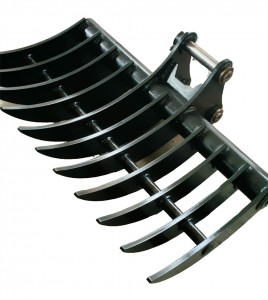
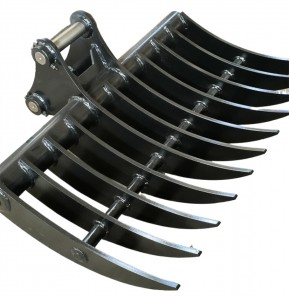
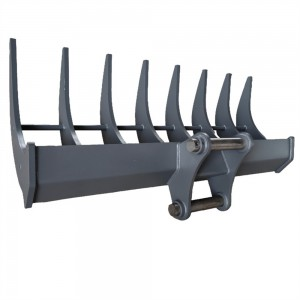
The Excavator Rake Bucket (referred to as "rake bucket" below) is a specialized hydraulic attachment designed for excavators, integrating the functions of a standard bucket and a rake. Unlike traditional buckets that focus on scooping bulk materials, it features evenly distributed rigid tines (rake teeth) on the front edge, enabling tasks such as debris sorting, vegetation clearing, soil leveling, and rock separation. This dual-purpose design makes it a versatile tool in industries like landscaping, construction site preparation, forestry, and mining. By leveraging the excavator’s hydraulic power, it can efficiently handle mixed materials (e.g., soil with rocks, grass with roots) — separating unwanted debris from usable materials and replacing labor-intensive manual raking, thus improving work efficiency by 40–60%.1. General Definition and Core Function
The Excavator Rake Bucket (referred to as "rake bucket" below) is a specialized hydraulic attachment designed for excavators, integrating the functions of a standard bucket and a rake. Unlike traditional buckets that focus on scooping bulk materials, it features evenly distributed rigid tines (rake teeth) on the front edge, enabling tasks such as debris sorting, vegetation clearing, soil leveling, and rock separation. This dual-purpose design makes it a versatile tool in industries like landscaping, construction site preparation, forestry, and mining. By leveraging the excavator’s hydraulic power, it can efficiently handle mixed materials (e.g., soil with rocks, grass with roots) — separating unwanted debris from usable materials and replacing labor-intensive manual raking, thus improving work efficiency by 40–60%.
2. Key Structural Components
2.1 Bucket Body (Base Structure)
Material and Durability: The bucket shell is constructed from high-strength low-alloy steel (Q355B for the main body; AR400 for the front edge), with a thickness of 8–16 mm. The front edge (where tines are mounted) is reinforced with a 12–20 mm thick steel plate to withstand impact from rocks or tree roots. For heavy-duty models, the bucket bottom is welded with cross ribs (spacing: 150–250 mm) to prevent deformation under the weight of mixed materials (e.g., 5–10 tons of soil and rocks), extending the service life to 2,000–3,000 operating hours.
Design Features: The bucket adopts a "shallow arc" design (depth: 200–500 mm) to facilitate material discharge and prevent debris accumulation. The back plate is inclined at 30°–45° to reduce resistance when raking forward. The capacity ranges from 0.2 m³ (for mini-excavators: 1–5 tons) to 2.0 m³ (for mid-sized excavators: 15–25 tons), matching different excavator tonnages and operation scales.
2.2 Rake Tooth Mechanism (Core Working Component)
Tooth Material and Shape: The tines are made of high-carbon alloy steel (40Cr or 65Mn) 经过 quenching and tempering treatment, achieving a surface hardness of HRC 50–55 and a core toughness of ≥15 J/cm². This ensures the tines resist bending or breaking when raking hard materials (e.g., 100–300 mm diameter rocks). The tooth shape is optimized into a "tapered pointed tip" (tip angle: 30°–45°) for easy penetration into soil or vegetation, while the middle section is thickened (15–25 mm) to enhance load-bearing capacity.
Tooth Arrangement and Fixing: Tines are evenly arranged along the front edge of the bucket, with a spacing of 50–150 mm (adjustable based on application). Narrow spacing (50–80 mm) is used for fine sorting (e.g., separating small stones from soil), while wide spacing (100–150 mm) is suitable for clearing large debris (e.g., tree branches, construction waste). Tines are fixed via bolted connections (M16–M24 high-strength bolts) for easy replacement — worn or broken tines can be replaced in 10–15 minutes without disassembling the entire bucket.
2.3 Hydraulic Drive and Connection Components
Hydraulic Cylinder (for Tilting, Optional): Heavy-duty rake buckets are equipped with a hydraulic tilt cylinder (bore diameter: 50–80 mm; stroke: 100–200 mm) mounted on the bucket back plate. The cylinder enables the bucket to tilt ±15° horizontally, adjusting the raking angle to adapt to sloped terrain (e.g., hillsides, road embankments) and improving debris collection efficiency by 20–30%.
Mounting Interface: Designed to match the excavator’s standard bucket linkage (pin-on or quick-coupler). The mounting lugs are made of 20–30 mm thick steel and precision-drilled to ensure coaxiality with the excavator’s arm (error ≤0.1 mm), reducing vibration during raking. For quick-coupler compatibility (ISO 13031 or OEM standards), tool changes take 5–8 minutes, faster than traditional pin-on mounting.
2.4 Anti-Wear and Protection Components
Tooth Tips (Optional): For extremely abrasive environments (e.g., mining, quarrying), tines can be equipped with tungsten carbide tips (thickness: 5–10 mm). These tips increase wear resistance by 3–4 times, extending the tooth replacement cycle from 500 hours to 1,500–2,000 hours.
Side Plates: The bucket’s side plates extend 50–100 mm forward beyond the tines to prevent materials from spilling sideways during raking. The side plate edges are rounded (radius: 10–15 mm) to avoid scratching the ground or damaging underground pipes/cables.
3. Working Principle
3.1 Hydraulic Power Transmission
The rake bucket relies on the excavator’s main hydraulic system (boom and arm cylinders) for movement — no additional auxiliary hydraulic circuit is required for basic raking functions. For models with a tilt cylinder, the excavator’s auxiliary hydraulic circuit supplies oil (pressure: 20–28 MPa) to control the bucket’s horizontal tilt angle. The operator adjusts the excavator’s arm and boom via the control lever to control the rake bucket’s height, depth, and forward speed.
3.2 Typical Operation Process
Positioning and Depth Adjustment: The operator lowers the rake bucket to the ground, adjusting the boom to set the raking depth (50–150 mm, depending on material thickness). For vegetation clearing, the depth is set to 50–80 mm to uproot grass and small shrubs without digging too deep; for rock separation, the depth is increased to 100–150 mm to sift out buried rocks.
Raking and Sorting: The excavator moves forward slowly (speed: 1–3 km/h), and the tines penetrate the material. Usable materials (e.g., fine soil, sand) pass through the tooth gaps into the bucket, while unwanted debris (e.g., rocks, branches) is pushed forward or retained on the tines. For mixed materials with large rocks, the bucket can be lifted slightly and shaken (by quickly operating the arm cylinder) to separate more fine soil.
Debris Discharge and Material Unloading: When the bucket is full of usable materials, the operator lifts the bucket and tilts it to unload the material into a truck or designated area. Debris retained on the tines is then dumped into a waste pile by tilting the bucket further or reversing the excavator to push the debris off.
Tilt Adjustment (for Sloped Terrain): On slopes (angle ≤30°), the tilt cylinder adjusts the bucket to keep the tines parallel to the ground, ensuring uniform raking depth and preventing the bucket from sliding sideways.
4. Classification by Application
4.1 Light-Duty Rake Bucket
Key Features: Designed for mini-excavators (1–5 tons), with a capacity of 0.2–0.5 m³ and tine spacing of 50–80 mm. Tines are made of 65Mn steel (thickness: 10–15 mm) for lightweight and flexibility. The bucket body uses Q355B steel without additional reinforcement, weighing 100–300 kg.
Application Scenarios: Landscaping (clearing grass, leveling flower beds), residential garden maintenance (removing small stones from soil), and municipal greening (trimming lawn edges). A 3-ton excavator-mounted light-duty rake bucket can clear 500–800 m² of grass per hour.
4.2 Medium-Duty Rake Bucket
Key Features: For mid-sized excavators (5–15 tons), with a capacity of 0.5–1.2 m³ and tine spacing of 80–120 mm. Tines are made of 40Cr steel (thickness: 15–20 mm) with quenched tips. The bucket front edge is reinforced with AR400 steel, and an optional tilt cylinder is available.
Application Scenarios: Construction site preparation (clearing construction waste, sorting soil and rocks), agricultural land development (removing tree roots and stones from farmland), and road construction (leveling roadbed soil). A 10-ton excavator-mounted medium-duty rake bucket can process 10–15 tons of mixed soil per hour.
4.3 Heavy-Duty Rake Bucket
Key Features: For large excavators (15–25 tons), with a capacity of 1.2–2.0 m³ and tine spacing of 120–150 mm. Tines are made of 40CrNiMoA alloy steel (thickness: 20–25 mm) with tungsten carbide tips. The bucket body is fully reinforced with cross ribs and AR500 steel plates, weighing 800–1,500 kg. Equipped with a tilt cylinder and a reinforced mounting interface.
Application Scenarios: Mining (separating ore fragments from waste rock), quarrying (sifting crushed stone), and forestry (clearing stumps and fallen trees). A 20-ton excavator-mounted heavy-duty rake bucket can process 20–30 tons of ore waste per hour.
4.4 Specialized Vegetation Rake Bucket
Key Features: Optimized for vegetation clearing, with curved tines (radius: 100–150 mm) to wrap around branches and shrubs. Tine spacing is 80–100 mm to prevent small branches from slipping through. The bucket back plate has a "hook" design to pull out deep-rooted plants (e.g., shrubs, small trees).
Application Scenarios: Forestry land clearing (preparing land for afforestation), wetland restoration (removing invasive plants), and wildfire prevention (clearing vegetation in fire-break zones). A 12-ton excavator-mounted vegetation rake bucket can clear 1,000–1,500 m² of dense shrubs per hour.
5. Practical Applications and Advantages
5.1 Efficiency Improvement in Site Preparation
Time Savings: Manual raking and sorting of 1,000 m² of construction site takes 8–12 hours (with 2–3 workers), while a rake bucket completes the task in 1–2 hours — reducing operation time by 70–80%. For large-scale road construction (10 km roadbed), the rake bucket shortens soil sorting time from 10 days to 2–3 days.
Labor Reduction: A single excavator operator can handle tasks that previously required 2–3 manual workers, reducing labor costs by 60–70%. This is particularly valuable for remote construction sites (e.g., mountain roads) where labor recruitment is difficult.
5.2 Versatility in Material Handling
Multi-Task Adaptability: Unlike dedicated tools (e.g., soil buckets, hand rakes), the rake bucket handles raking, sorting, leveling, and debris clearing in one unit. For example, in a landscaping project, it can first clear grass, then sort soil and stones, and finally level the ground — eliminating the need to switch between 2–3 attachments.
Material Conservation: By separating usable materials (e.g., fine soil) from debris, the rake bucket reduces the need for purchasing new soil or sand. For a residential construction project requiring 100 m³ of backfill soil, the rake bucket can recover 60–80 m³ of usable soil from the site, saving
2,000 in material costs.
5.3 Cost Savings and Environmental Benefits
Maintenance Cost Reduction: The rake bucket has fewer moving parts than complex attachments (e.g., screening buckets), reducing maintenance frequency. Tine replacement costs
50 per tooth (vs. 200-500 for screening bucket mesh), lowering annual maintenance costs by 40–50%.
Reduced Environmental Impact: By reusing on-site materials (e.g., sorted soil), the rake bucket reduces the transportation of external materials and waste disposal — cutting carbon emissions by 30–40% compared to traditional methods. For example, a quarry using a rake bucket reduces waste rock transportation by 5,000–10,000 tons per year.
6. Operational and Maintenance Considerations
6.1 Excavator Matching Requirements
Weight and Capacity: The rake bucket’s weight should not exceed 10–15% of the excavator’s operating weight (e.g., a 5-ton excavator should use a rake bucket weighing ≤0.75 tons). Overloading causes the excavator’s arm to sag, increasing fuel consumption by 15–20% and accelerating arm cylinder wear. The bucket capacity should match the excavator’s lifting power (e.g., a 15-ton excavator can handle a 1.2–1.5 m³ rake bucket).
Hydraulic Compatibility: For models with a tilt cylinder, the excavator must have an auxiliary hydraulic circuit (flow rate: 10–30 L/min). If the excavator lacks an auxiliary circuit, a hydraulic conversion kit (adding a valve and lever) is required — costing
2,000.
6.2 Routine Maintenance
Tooth Maintenance: Inspect tines daily for bending, breaking, or wear — replace bent/broken tines immediately to avoid uneven raking. Worn tines (tip wear ≥5 mm) should be replaced or re-sharpened (using a grinding wheel) to maintain penetration efficiency. For tungsten carbide tips, check for loose or fallen tips weekly.
Bucket Body Inspection: Check the bucket shell and reinforcement ribs for cracks weekly — weld small cracks (≤50 mm) with E5015 electrodes; replace severely cracked parts. Clean the bucket after each use to remove soil or debris that could cause corrosion.
Lubrication: Grease the mounting pins and tilt cylinder hinges every 4 hours of operation (using lithium-based grease NLGI 2). For quick-coupler connections, apply anti-rust oil monthly to prevent seizing.
6.3 Safety Operation Rules
Operator Training: Operators must learn to control the raking depth and forward speed — avoid raking too deep (which can damage underground pipes/cables) or too fast (which can cause the excavator to tip forward). Training should include emergency procedures (e.g., stopping immediately if tines hit hard objects like rocks or steel bars).
On-Site Safety: Before operation, survey the site to identify underground utilities (e.g., water pipes, electrical cables) and mark them to avoid damage. Keep personnel at least 5 meters away from the rake bucket’s working range to prevent injury from flying debris (e.g., small stones). When working on slopes, ensure the excavator is level and use the tilt cylinder to maintain stability — never operate on slopes with an angle exceeding 30°.