




Excavator Tilting Bucket
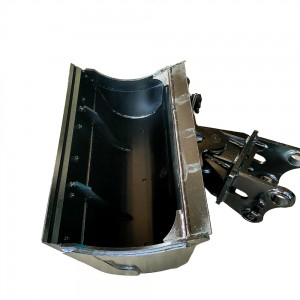
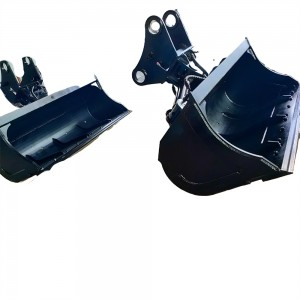
The Excavator Tilting Bucket (referred to as "tilting bucket" below) is a specialized hydraulic attachment designed for excavators, featuring an adjustable tilting function that differentiates it from standard fixed buckets. Unlike traditional buckets limited to vertical dumping, it can tilt horizontally by ±30°–±45° via a dedicated hydraulic cylinder, enabling precise material placement, slope finishing, and ditch excavation in irregular terrains. This design makes it a core tool in industries like road construction, landscaping, water conservancy engineering, and municipal infrastructure. By leveraging the excavator’s hydraulic system, it delivers flexible angle control to handle asymmetric or sloped work scenarios—replacing manual slope trimming (which requires 2–3 workers) and reducing operation time by 50–70%.1. General Definition and Core Function
The Excavator Tilting Bucket (referred to as "tilting bucket" below) is a specialized hydraulic attachment designed for excavators, featuring an adjustable tilting function that differentiates it from standard fixed buckets. Unlike traditional buckets limited to vertical dumping, it can tilt horizontally by ±30°–±45° via a dedicated hydraulic cylinder, enabling precise material placement, slope slope finishing, and ditch excavation in irregular terrains. This design makes it a core tool in industries like road construction, landscaping, water conservancy engineering, and municipal infrastructure. By leveraging the excavator’s hydraulic system, it delivers flexible angle control to handle asymmetric or sloped work scenarios—replacing manual slope trimming (which requires 2–3 workers) and reducing operation time by 50–70%.
2. Key Structural Components
2.1 Bucket Body (Base Working Structure)
Material and Durability: The bucket shell is constructed from high-strength wear-resistant steel, with the main body using Q355B steel (thickness: 8–16 mm) and the cutting edge adopting AR400/AR500 wear-resistant steel (thickness: 12–20 mm). This combination balances structural strength and wear resistance—suitable for digging hard soil, gravel, or concrete debris. For heavy-duty models, the bucket bottom and side plates are reinforced with cross ribs (spacing: 150–250 mm) to prevent deformation under the weight of 5–15 tons of material, extending the service life to 2,500–3,500 operating hours.
Design Features: The bucket adopts a "deep arc" design (depth: 300–600 mm) to maximize material capacity, ranging from 0.3 m³ (for mini-excavators: 1–5 tons) to 3.0 m³ (for large excavators: 20–35 tons). The cutting edge is equipped with replaceable bucket teeth (alloy steel 20CrMnTi) via bolted connections—replacing worn teeth takes 5–10 minutes per tooth. The bucket’s rear end is designed with a "tilt cylinder mounting bracket" (made of 20–30 mm thick steel) to securely fix the hydraulic cylinder.
2.2 Hydraulic Tilting Mechanism (Core Adjustable Component)
Tilting Cylinder: The core component enabling bucket tilt, a single double-acting hydraulic cylinder (bore diameter: 60–120 mm; stroke: 150–300 mm) mounted horizontally between the bucket body and the excavator’s arm linkage. The cylinder barrel is made of 27SiMn seamless steel, and the piston rod is chrome-plated (plating thickness ≥0.06 mm) to resist corrosion and scratch. Operating at a working pressure of 25–35 MPa, it generates a tilting force of 40–150 kN—for example, a 10-ton excavator-mounted tilting bucket can tilt 1.2 m³ of gravel (weight ~1.8 tons) to ±35° smoothly.
Tilting Linkage: A "four-bar linkage" system connects the tilting cylinder to the bucket body, converting the cylinder’s linear motion into the bucket’s rotational tilt. The linkage rods are made of 40CrNiMoA alloy steel (diameter: 30–50 mm) and heat-treated to HRC 35–40 for high torque resistance. The linkage joints use self-lubricating bronze bushings to reduce friction—requiring only biweekly greasing to maintain smooth tilting.
2.3 Hydraulic Control and Connection System
Control Valve: Integrated with a proportional flow valve to adjust the tilting speed (50–100 mm/s) and a one-way check valve to lock the bucket’s tilt angle when the hydraulic system loses pressure (e.g., hose leakage). This prevents the bucket from suddenly tilting and spilling material, ensuring operational safety. High-end models add a pressure relief valve to limit maximum tilting force, avoiding damage to the linkage or cylinder when tilting overloaded materials.
Mounting Interface: Designed to match the excavator’s standard arm linkage (pin-on or quick-coupler). The mounting lugs are precision-drilled (coaxiality error ≤0.1 mm) to align with the excavator’s arm, reducing vibration during digging and tilting. For quick-coupler compatibility (ISO 13031 or OEM standards), tool changes take 6–10 minutes—faster than traditional pin-on mounting.
Hydraulic Pipeline: Uses high-pressure steel wire braided hoses (DN16–DN25) with a working pressure of 40 MPa, covered with a polyurethane wear-resistant sleeve to resist impact from rocks or debris. The pipeline connects the tilting cylinder to the excavator’s auxiliary hydraulic circuit—no modification to the main hydraulic system is required, simply plugging into the auxiliary valve.
2.4 Anti-Wear and Protection Components
Side Cutters: Welded to the bucket’s side plate edges (made of AR500 steel), extending 50–80 mm forward to protect the side plates from wear when digging hard soil or rocks. The side cutters can be replaced independently when worn, reducing maintenance costs by 30% compared to replacing the entire side plate.
Skid Shoes: Installed at the bucket’s bottom front (made of AR400 steel), with an adjustable height (30–80 mm) to control the digging depth and prevent the cutting edge from excessive wear on hard ground. For slope finishing, the skid shoes ensure the bucket moves smoothly along the slope surface, maintaining a uniform slope angle.
3. Working Principle
3.1 Hydraulic Power Transmission
The excavator’s auxiliary hydraulic pump supplies high-pressure oil (25–35 MPa) to the tilting cylinder via the control valve. The operator controls the oil flow direction using a dedicated lever in the cab: pushing the lever left sends oil to the left cavity of the cylinder, extending the piston rod and tilting the bucket to the left; pushing the lever right sends oil to the right cavity, retracting the piston rod and tilting the bucket to the right. The proportional valve adjusts the oil flow rate to control the tilting speed, while the check valve locks the angle once the desired tilt is achieved.
3.2 Typical Operation Process
Digging Preparation: The operator adjusts the bucket to a horizontal position (0° tilt) and lowers it to the material surface using the excavator’s boom and arm. The skid shoes are set to the desired digging depth (50–200 mm) to avoid over-digging.
Material Excavation: The bucket teeth penetrate the material (soil, gravel, or debris) by operating the arm cylinder to pull the bucket backward. The deep arc design ensures maximum material retention—filling the bucket to 80–90% of its capacity.
Tilting Adjustment: After lifting the loaded bucket to the target height, the operator tilts the bucket to the required angle (e.g., +25° for dumping into a truck’s side compartment, -30° for slope trimming). The proportional control ensures smooth tilting, preventing material from spilling prematurely.
Precision Placement/Finishing: For slope finishing (e.g., road embankments with a 1:1.5 slope ratio), the bucket is tilted to match the slope angle and moved along the slope surface. The skid shoes glide on the slope, ensuring the finished surface is even and meets the design requirements. For ditch excavation (e.g., V-shaped ditches), the bucket tilts alternately left and right to shape the ditch walls without repositioning the excavator.
Material Dumping: Once positioned, the bucket is tilted further (up to ±45°) to dump the material. The check valve ensures the tilt angle remains stable during dumping, even if the excavator vibrates.
4. Classification by Application
4.1 Light-Duty Tilting Bucket
Key Features: Designed for mini-excavators (1–5 tons), with a capacity of 0.3–0.8 m³ and a tilting angle of ±30°. The bucket body uses Q355B steel (thickness: 8–10 mm) without additional reinforcement, and the tilting cylinder has a bore diameter of 60–80 mm. Suitable for light materials (e.g., soil, sand, or small decorative stones).
Application Scenarios: Landscaping (shaping flower bed slopes, digging small ditches), residential construction (excavating foundation trenches with sloped walls), and municipal greening (trimming lawn edges into sloped borders). A 3-ton excavator-mounted light-duty bucket can finish 200–300 m² of small slopes per hour.
4.2 Medium-Duty Tilting Bucket
Key Features: For mid-sized excavators (5–15 tons), with a capacity of 0.8–2.0 m³ and a tilting angle of ±35°. The bucket cutting edge uses AR400 steel, and the side plates are reinforced with 10–12 mm thick ribs. The tilting cylinder has a bore diameter of 80–100 mm, generating a tilting force of 40–100 kN.
Application Scenarios: Road construction (finishing road embankments, excavating drainage ditches), agricultural engineering (digging irrigation ditches with sloped walls), and industrial site leveling (shaping sloped terrain for factory yards). A 10-ton excavator-mounted medium-duty bucket can excavate 15–25 m of drainage ditches (1 m wide, 0.8 m deep) per hour.
4.3 Heavy-Duty Tilting Bucket
Key Features: For large excavators (15–35 tons), with a capacity of 2.0–3.0 m³ and a tilting angle of ±45°. The bucket body is fully reinforced with AR500 steel (cutting edge thickness: 20 mm) and cross ribs (spacing: 150 mm). The tilting cylinder has a bore diameter of 100–120 mm, generating a tilting force of 100–150 kN. Equipped with replaceable side cutters and heavy-duty skid shoes.
Application Scenarios: Water conservancy engineering (building dam slopes, excavating river channels), mining (shaping ore pile slopes), and large-scale road construction (finishing highway subgrades with steep slopes). A 25-ton excavator-mounted heavy-duty bucket can finish 500–800 m² of dam slopes per hour.
4.4 Specialized Ditch Tilting Bucket
Key Features: Optimized for ditch excavation, with a "V-shaped" or "U-shaped" bucket profile (instead of the standard arc) to match ditch cross-sections. The tilting angle is ±40°, and the bucket width is adjustable (300–1,200 mm) to fit different ditch widths. The cutting edge is sharpened for easy penetration into hard soil.
Application Scenarios: Municipal drainage (excavating V-shaped rainwater ditches), agricultural irrigation (digging U-shaped irrigation ditches), and pipeline construction (excavating narrow ditches for water/gas pipes with sloped walls). A 12-ton excavator-mounted ditch tilting bucket can excavate 30–40 m of 0.6 m wide ditches per hour.
5. Practical Applications and Advantages
5.1 Efficiency Improvement in Slope and Ditch Work
Time Savings: Manual slope trimming (e.g., a 100 m long, 1 m high road embankment) takes 4–6 hours (with 2–3 workers), while a tilting bucket completes the task in 1–1.5 hours—reducing operation time by 70–80%. For a 5 km drainage ditch project, the tilting bucket shortens construction time from 10 days to 2–3 days.
Labor Reduction: A single excavator operator can handle slope finishing or ditch excavation that previously required 2–3 workers (1 for digging, 2 for trimming). This reduces labor costs by 60–70%, especially valuable for remote construction sites (e.g., mountain roads) where labor is scarce.
5.2 Precision Enhancement in Asymmetric Work
Slope Accuracy: The tilting bucket’s angle control (precision ±1°) ensures slopes meet design requirements (e.g., 1:2 slope ratio for highway embankments), avoiding rework caused by manual trimming errors. This reduces rework rates by 90% compared to traditional methods.
Ditch Uniformity: For ditches with consistent cross-sections (e.g., 0.8 m wide, 0.6 m deep), the tilting bucket maintains uniform width and depth along the entire ditch length—deviations ≤50 mm, meeting municipal engineering standards (e.g., China’s CJJ 1-2008 《Code for Construction and Acceptance of Municipal Road Engineering》).
5.3 Versatility and Cost Savings
Multi-Scene Adaptability: Unlike dedicated slope tools (e.g., slope finishers) or fixed ditch buckets, the tilting bucket handles digging, tilting, and finishing in one unit. For example, in a road construction project, it can first excavate roadbed soil, then finish the embankment slope—eliminating the need to switch between 2–3 attachments.
Cost Reduction: Investing in one tilting bucket is cheaper than buying a separate fixed bucket and slope finisher (saving 40–60% of attachment costs). For example, a 10-ton excavator’s tilting bucket costs
9,000, while a separate fixed bucket (3,000-5,000) and slope finisher (8,000) total 8,000-13,000. Maintenance costs are also lower—fewer attachments mean fewer hydraulic hoses and components to inspect.
6. Operational and Maintenance Considerations
6.1 Excavator Matching Requirements
Weight and Capacity: The tilting bucket’s weight should not exceed 15–20% of the excavator’s operating weight (e.g., a 5-ton excavator should use a tilting bucket weighing ≤1 ton). Overloading causes the excavator’s arm to sag, increasing fuel consumption by 15–20% and accelerating arm cylinder wear. The bucket capacity should match the excavator’s lifting power (e.g., a 15-ton excavator can handle a 2.0–2.5 m³ tilting bucket).
Hydraulic Compatibility: The excavator must have an auxiliary hydraulic circuit (flow rate: 15–40 L/min) to power the tilting cylinder. If the excavator lacks an auxiliary circuit, a hydraulic conversion kit (adding a valve and lever) is required—costing
2,500. The circuit’s working pressure must be ≥25 MPa to ensure normal tilting.
6.2 Routine Maintenance
Tilting Mechanism Maintenance: Inspect the tilting cylinder’s piston rod for scratches or corrosion daily—apply anti-rust oil if needed. Check the linkage joints for looseness weekly; tighten bolts if there is excessive play. Grease the linkage bushings and cylinder hinges every 6 hours of operation (using lithium-based grease NLGI 2).
Bucket Body and Teeth: Inspect the cutting edge and side cutters for wear daily—replace them when wear depth exceeds 5 mm. Check the bucket teeth for breakage; replace worn or broken teeth to maintain digging efficiency. Clean the bucket after each use to remove soil or debris that could cause corrosion, especially for buckets used in coastal areas (to prevent saltwater corrosion).
Hydraulic System Check: Inspect the hydraulic hoses and couplings for leaks or cracks weekly—replace damaged hoses immediately (using hoses rated for 40 MPa). Change the auxiliary hydraulic oil filter every 1,000 operating hours to prevent oil contamination from clogging the control valve or cylinder.
6.3 Safety Operation Rules
Operator Training: Operators must master the tilting angle control and coordinate it with the excavator’s boom/arm movements—avoid tilting the bucket when it is at maximum height (≥8 meters) to prevent instability. Training should include emergency procedures (e.g., cutting off auxiliary hydraulic power if the tilting cylinder malfunctions).
On-Site Safety: Before operation, survey the site to identify underground utilities (e.g., water pipes, electrical cables) and mark them—avoid digging too deep or tilting the bucket into utility lines. Keep personnel at least 6 meters away from the bucket’s working range to prevent injury from flying debris or spilled material. When working on slopes, ensure the excavator is level and use the tilting function to maintain balance—never operate on slopes with an angle exceeding 25°.