×
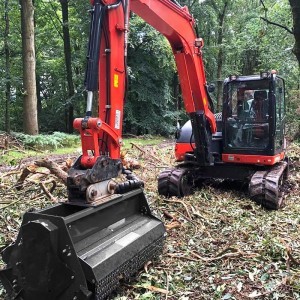
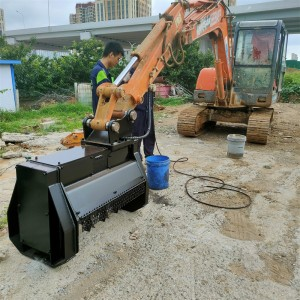
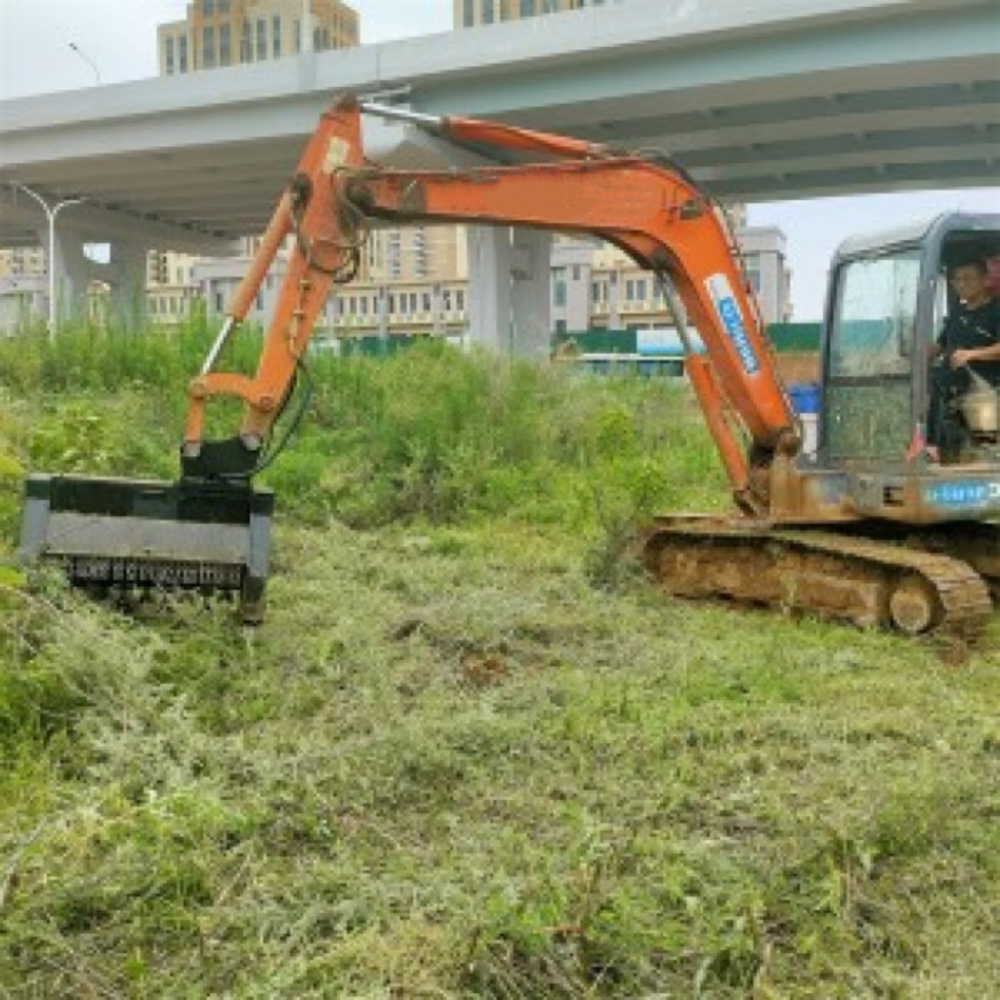
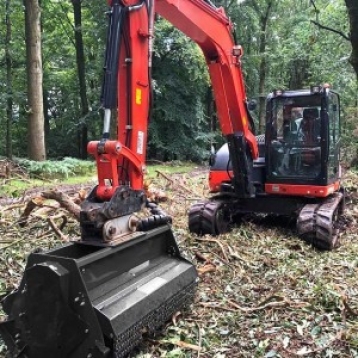
A Hydraulic Mobile Excavator Lawn Mower is an innovative and powerful piece of equipment that combines the mobility and versatility of an excavator with the grass - cutting capabilities of a lawn mower. This attachment transforms a standard excavator into a highly efficient tool for large - scale lawn maintenance, land - clearing, and vegetation management. It is designed to handle various terrains and vegetation types, making it suitable for a wide range of applications, from commercial landscaping projects to agricultural and forestry operations. By leveraging the hydraulic power of the excavator, the lawn mower attachment can deliver high - performance cutting with precision and control.
Blades: The cutting blades are the heart of the lawn mower attachment. They are typically made from high - strength, hardened steel alloys to endure the demanding task of cutting through thick grass, brush, and even small tree saplings. Different blade designs are available depending on the application. For instance, flail - type blades are common, which consist of a series of freely - swinging metal bars or blades attached to a rotating drum. These blades can effectively shred vegetation by delivering a combination of impact and cutting forces. Another type is the rotary blade, which is similar to those found in traditional lawn mowers but is larger and more robust. Rotary blades are ideal for cutting grass and thinner vegetation with a clean, smooth cut. The number of blades varies based on the size and capacity of the mower, with larger models featuring more blades to increase cutting efficiency.
Cutter Shaft and Drum: The blades are mounted on a cutter shaft, which is connected to a drum. The cutter shaft is designed to rotate at high speeds, driven by a hydraulic motor. The drum provides a stable platform for the blades and helps in distributing the cutting forces evenly. In some advanced models, the cutter shaft and drum are engineered to be self - balancing, reducing vibration and ensuring smooth operation. This not only improves the cutting performance but also extends the lifespan of the components, minimizing maintenance requirements. The drum may also be equipped with additional features such as replaceable wear plates to protect against abrasion from rocks and other hard objects in the vegetation.
Hydraulic Motor: The power source for the cutting mechanism is a hydraulic motor. This motor is integrated with the excavator's existing hydraulic system. The excavator's hydraulic pump pressurizes the hydraulic fluid, which is then directed to the hydraulic motor of the lawn mower attachment. The hydraulic motor converts the hydraulic energy into mechanical rotational energy, driving the cutter shaft and blades. The size and power of the hydraulic motor are carefully selected based on the requirements of the mower. Larger, heavy - duty mowers may require more powerful hydraulic motors with higher torque output to handle thick and tough vegetation. Some hydraulic motors are also designed to be variable - speed, allowing the operator to adjust the cutting speed according to the density and type of vegetation.
Hoses and Fittings: A network of high - pressure hydraulic hoses and fittings is used to connect the hydraulic motor to the excavator's hydraulic system. These hoses are constructed to withstand the high pressures generated by the hydraulic system, typically ranging from 2000 - 3500 pounds per square inch (psi). Quick - connect fittings are often employed to simplify the installation and removal of the mower attachment. They enable fast connection and disconnection of the hydraulic lines without the need for complex tools or time - consuming procedures. Additionally, the hoses and fittings are designed to be leak - proof and durable, ensuring reliable operation even in harsh working conditions.
Mounting Plate and Bracket: The lawn mower attachment is securely attached to the excavator's arm through a mounting plate and bracket system. The mounting plate is fabricated from thick, high - strength steel to provide a stable and rigid connection. It is designed to fit precisely with the excavator's attachment points, whether it's a standard pin - on system or a quick - coupler. The bracket is then connected to the mounting plate and supports the weight of the mower, while also allowing for some degree of movement and adjustment. In some cases, the mounting system may include shock - absorbing elements to reduce vibrations transferred from the cutting operation to the excavator's arm, protecting both the attachment and the excavator.
Skid Shoes and Adjustment Mechanisms: Skid shoes are attached to the bottom of the mower housing or frame. These shoes serve multiple purposes. They help to support the weight of the mower, protect the cutting mechanism from hitting the ground or obstacles, and also allow for easy adjustment of the cutting height. The skid shoes can be made of durable materials such as hardened steel or wear - resistant rubber. Some mowers are equipped with an adjustable skid - shoe system, which enables the operator to set the cutting height according to the specific requirements of the job. This can be done manually using adjustment bolts or, in more advanced models, through a hydraulic or mechanical self - leveling system that automatically maintains a consistent cutting height even on uneven terrain.
The power for the Hydraulic Mobile Excavator Lawn Mower is derived from the excavator's hydraulic system. When the operator activates the mowing function, the hydraulic pump in the excavator draws hydraulic fluid from the reservoir and pressurizes it. This high - pressure fluid is then routed through the hydraulic hoses to the hydraulic motor of the lawn mower attachment. As the hydraulic fluid enters the motor, it causes the motor's shaft to rotate. The rotation of the motor shaft is transferred to the cutter shaft of the mower, either directly or through a transmission system such as a belt or gear drive. In a direct - drive system, the motor shaft is directly connected to the cutter shaft, providing a simple and efficient power transfer with minimal power loss. In a belt - or gear - drive system, the transmission components can be adjusted to change the speed and torque ratio between the motor and the cutter shaft, allowing for more flexibility in handling different types of vegetation.
As the cutter shaft rotates at high speeds, the attached blades spin, cutting through the vegetation. In the case of flail - type blades, they swing freely as the drum rotates, striking the vegetation and shredding it into small pieces. The impact of the blades against the vegetation, combined with their sharp edges, allows them to cut through thick grass, brush, and small branches. Rotary blades, on the other hand, rotate in a circular motion, slicing through the vegetation with a clean, scissor - like action. The cutting height is determined by the position of the skid shoes or the self - leveling mechanism. If the skid shoes are set at a certain height above the ground, the blades will cut the vegetation at that height. The self - leveling system, if equipped, uses sensors to detect the terrain's elevation and automatically adjusts the angle of the mower to maintain a constant cutting height. For example, when mowing on a slope, the self - leveling system will tilt the mower so that the blades remain parallel to the ground, ensuring an even cut across the entire area.
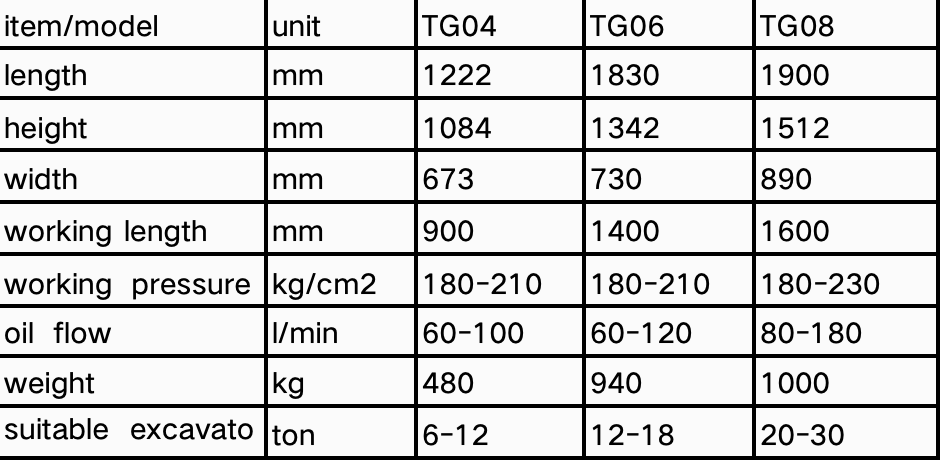
Design and Application: Light - duty Hydraulic Mobile Excavator Lawn Mowers are typically designed for use with smaller excavators, usually in the 1 - 5 - ton range. They are suitable for tasks such as maintaining residential lawns, small parks, and gardens. These mowers have a relatively narrow cutting width, often between 30 - 40 inches, and a lower cutting capacity, typically able to handle vegetation up to 2 - 3 inches in diameter. They are lightweight and compact, which makes them highly maneuverable in tight spaces. For example, in a small backyard with flower beds, trees, and other obstacles, a light - duty mower can easily navigate around these features and perform the cutting task without causing damage.
Features: Light - duty mowers often come with basic features such as a simple belt - drive system for power transmission, which is cost - effective and easy to maintain. They may have a smaller hydraulic motor, as they do not require as much power as heavy - duty models. The cutting blades are usually made of standard - grade steel and are sufficient for cutting through grass and thin shrubs. Some light - duty mowers are equipped with a manual cutting - height adjustment system using skid shoes, allowing the operator to set the desired height for the cut. The housing of these mowers is typically made from thinner gauge steel to keep the weight down while still providing adequate protection for the cutting mechanism.
Design and Application: Heavy - duty Hydraulic Mobile Excavator Lawn Mowers are built for larger excavators, typically those weighing 5 tons or more. They are designed to handle more challenging vegetation - clearing tasks, such as in forestry projects, large - scale land - clearing for construction, or maintaining fire - break areas. These mowers have a wider cutting width, often ranging from 40 - 60 inches or more, and a much higher cutting capacity, capable of handling tree saplings and thick brush up to 6 inches in diameter. In a forested area where a large - scale fire - break needs to be created, a heavy - duty mower can quickly clear a wide swath of vegetation, reducing the risk of wildfires spreading.
Features: Heavy - duty mowers are equipped with more powerful hydraulic motors, often gear - drive motors, to provide the necessary torque for cutting through tough materials. They have a more robust construction, with the housing made from thick, high - strength steel plates to withstand impacts from large branches and rocks. Many heavy - duty mowers also feature an electronically balanced cutter shaft and drum for smooth operation at high speeds. They are more likely to be equipped with advanced features such as a self - leveling system, which uses sensors and hydraulic actuators to automatically adjust the mower's angle based on the terrain. Additionally, they may have larger and more durable skid shoes to handle uneven and rough terrain.
Mulching Mowers: These are a type of specialty Hydraulic Mobile Excavator Lawn Mowers designed not only to cut the vegetation but also to mulch it into small pieces. The blades of a mulching mower are designed in a way that they repeatedly chop the cut vegetation, reducing it to small fragments. These fragments can then be left on the ground, where they act as a natural fertilizer, enriching the soil. Mulching mowers are often used in areas where a natural, low - maintenance look is desired, such as in natural parks or around residential properties. The mulched vegetation helps to retain moisture in the soil, suppress weed growth, and add organic matter over time.
Side - Winder Mowers: Side - winder mowers have a unique design that allows the cutting head to be positioned at an angle to the excavator's arm. This design is particularly useful for mowing along fences, walls, or in areas where a traditional straight - cutting mower would be difficult to operate. The side - winder feature enables the operator to get closer to obstacles and achieve a more precise cut. For example, when mowing along the edge of a property next to a fence, a side - winder mower can easily reach and cut the grass right up to the fence without damaging it. The cutting head of a side - winder mower can usually be adjusted to different angles, providing flexibility in different mowing situations.
Large - Scale Lawn Maintenance: In commercial landscapes, such as golf courses, large parks, and corporate campuses, Hydraulic Mobile Excavator Lawn Mowers can quickly and efficiently mow large areas of grass. Their ability to cover a wide area in a short time reduces the labor and time required for lawn maintenance. For example, a golf course with extensive fairways and roughs can use an excavator - mounted lawn mower to mow these areas, ensuring a well - groomed appearance. The mower can easily navigate around bunkers, water hazards, and other obstacles on the golf course.
Vegetation Management in Gardens: In large gardens or estates, these mowers can be used to manage overgrown vegetation, cut back shrubs, and clear small areas of brush. They can reach areas that are difficult to access with traditional lawn mowers, such as slopes or areas near large trees. This helps to keep the garden looking neat and tidy while also promoting the growth of desired plants. The operator can use the excavator's arm to position the mower precisely, allowing for careful cutting around delicate plants and flower beds.
Farmland Preparation: Before planting crops, farmers may need to clear the land of weeds, grass, and small shrubs. Hydraulic Mobile Excavator Lawn Mowers can be used to quickly clear the fields, preparing the soil for planting. They can also be used to maintain the boundaries of the farmland, cutting back overgrown vegetation along fences and ditches. In addition, these mowers can be used to manage the growth of grass and weeds in pastures, ensuring that livestock have access to fresh and healthy forage.
Forestry Thinning and Fire - Break Maintenance: In forestry, these mowers are used for thinning out small trees and underbrush. This helps to improve the health of the forest by allowing more sunlight to reach the ground and reducing competition for resources. Additionally, they are crucial for maintaining fire - break areas. By regularly cutting and clearing vegetation in fire - break zones, the risk of wildfires spreading can be significantly reduced. The mowers can reach areas in the forest that are difficult to access with other equipment, making them an effective tool for forest management.
Roadside Maintenance: Municipalities use Hydraulic Mobile Excavator Lawn Mowers to keep the grass and vegetation along roadsides under control. This not only improves the aesthetics of the area but also enhances safety by ensuring clear sightlines for drivers. The mowers can quickly cut the grass on slopes and in hard - to - reach areas along the roadside, reducing the need for manual labor and minimizing the risk of accidents. They can also be used to clear vegetation from drainage ditches, preventing blockages and ensuring proper water flow.
Recreational Area Maintenance: Public parks, sports fields, and other recreational areas require regular maintenance. Hydraulic Mobile Excavator Lawn Mowers can be used to mow large open areas, clear walking paths of overgrown vegetation, and maintain the edges of ponds and lakes within these areas. This helps to create a pleasant and safe environment for the public to enjoy. The mowers can work efficiently in these areas, even with the presence of playground equipment, benches, and other structures.
×
(1) Suitable model: 5~9 tons excavator
(2) customize large lawn mowers according to customer needs
(3) The weight of the equipment is 430 kg, and the effective working face length is 1 meter per minute at 4000~5000 RPM
(4) The frame design is compact, light and flexible, fast cutting speed, efficient, safe and reliable, and can also be customized 360 rotating lawn mower.
(5) The installation is simple, only with the excavator arm link, hydraulic oil road using broken hammer pipe
(6) Simple maintenance, usually only need to add butter lubrication can be, blade replacement is simple, work do not stand within 3 meters, replace the blade must be excavator flame out operation.
(7) Use hydraulic motor to drive the pulley design to avoid hard links caused by motor damage, pulley replacement is simple, adjustable tension.
(8) Low input cost, can replace the workload of 15 workers, thus saving labor costs.
(9) Hydraulic motor has high torque, high speed design, strong cutting force, good stability