×
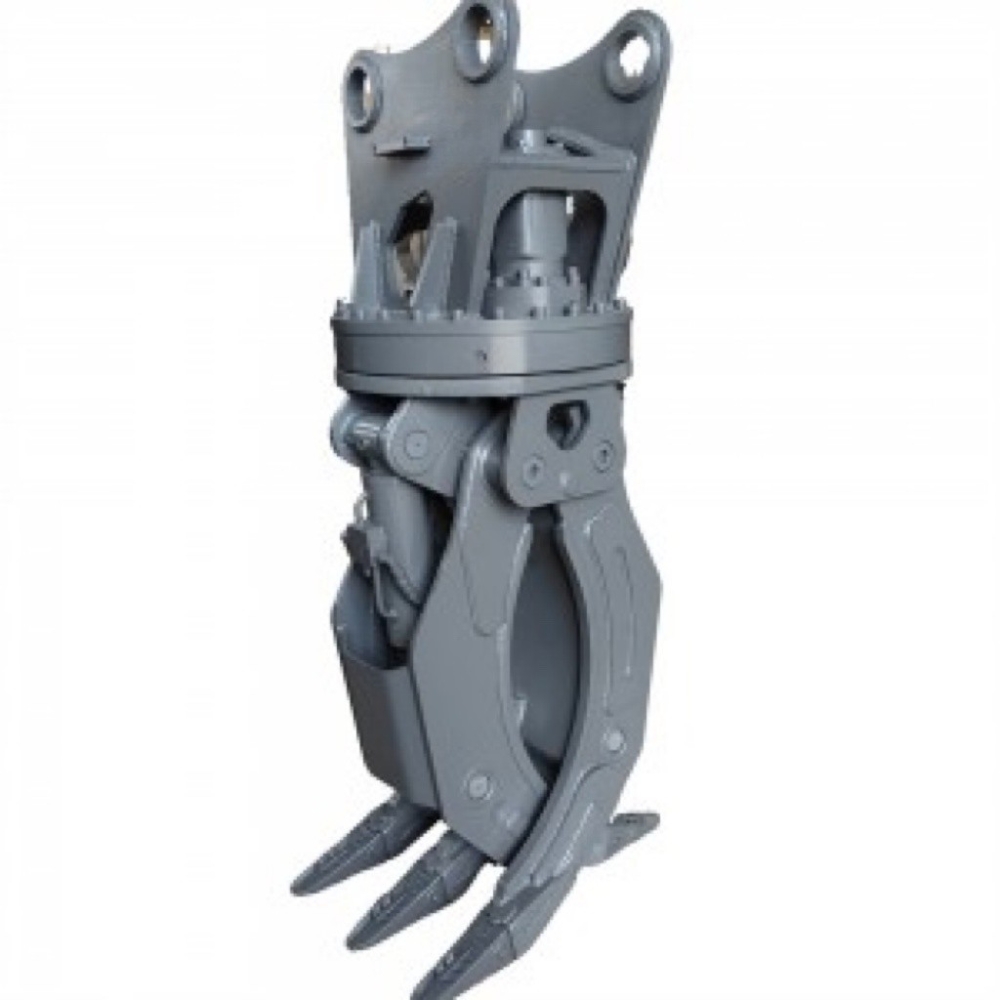
An Excavator Hydraulic Rotating Log Grapple is a specialized attachment that significantly enhances the functionality of an excavator, particularly in industries such as forestry, construction, and waste management. This device is designed to efficiently grip, lift, and transport logs, timber, and other large materials with precision and control. By harnessing the power of hydraulics, it enables operators to perform tasks that would otherwise be time - consuming and labor - intensive. The rotating feature of the grapple adds an extra dimension of flexibility, allowing for easy maneuvering of materials in various directions, even in tight or awkward spaces.
Material and Design: The grapple jaws are typically constructed from high - strength alloy steels, such as Q690 or NM400. These materials offer excellent durability and wear resistance, crucial for withstanding the harsh conditions of gripping and moving logs. The jaws are designed with a specific shape and tooth pattern to optimize their grip on different - sized logs. For example, some jaws have curved edges and serrated teeth to better conform to the round shape of logs and prevent slippage. The number of teeth and their spacing can also vary depending on the intended application. In a forestry setting where logs of different diameters are common, the jaws might have a variable - pitch tooth design to accommodate a wide range of log sizes.
Hydraulic Actuation: The opening and closing of the grapple jaws are controlled by hydraulic cylinders. These cylinders are connected to the excavator's hydraulic system, which supplies high - pressure hydraulic fluid. When the operator activates the control, the hydraulic fluid enters the cylinders, causing the piston inside to move. This movement is transferred to the jaws through a mechanical linkage, either directly or via a lever - based system. The hydraulic design allows for precise control of the clamping force. By adjusting the flow and pressure of the hydraulic fluid, the operator can apply just the right amount of force to grip the logs firmly without causing damage. For instance, when handling delicate or valuable timber, a lower clamping force can be applied, while for larger and heavier logs, a higher force can be generated.
Hydraulic Motor and Gears: The rotating function of the log grapple is powered by a hydraulic motor. This motor is integrated with a set of gears, often a planetary gear system, which provides a high - torque output for smooth and efficient rotation. The hydraulic motor converts the hydraulic energy from the excavator's system into rotational mechanical energy. The planetary gear system is preferred in many cases due to its compact size, high reduction ratio, and ability to handle heavy loads. It allows the grapple to rotate 360 degrees in both clockwise and counter - clockwise directions. The rotation speed can be controlled by the operator through the excavator's control console. By adjusting the flow rate of the hydraulic fluid to the motor, the operator can slow down or speed up the rotation, enabling precise positioning of the logs.
Sealed Rotary Drive and Bearings: To ensure long - term reliability and performance, the rotation mechanism often features a sealed rotary drive. This design helps to prevent the leakage of hydraulic fluid and protects the internal components from dust, dirt, and moisture. Sealed rotary drives are designed to require minimal maintenance. For example, some models only need light greasing (about 80 g of grease) once every six months, as opposed to products on the market that may require daily greasing. The bearings used in the rotation mechanism are also of high quality, designed to withstand the radial and axial loads generated during the rotation and operation of the grapple. These bearings are carefully selected based on the expected load and speed requirements to ensure smooth rotation and a long service life.
Mounting Plate and Quick - Coupler Compatibility: The log grapple is attached to the excavator's arm through a mounting plate. The mounting plate is designed to be compatible with the excavator's quick - coupler system, which allows for rapid and easy attachment and detachment of the grapple. This is a significant advantage as it reduces the downtime between different tasks. In cases where the excavator needs to switch from using a log grapple to a different attachment, such as a bucket, the quick - coupler system enables this change to be made in a matter of minutes. The mounting plate is made from thick, high - strength steel to ensure a secure and stable connection. It is engineered to withstand the forces exerted during the operation of the grapple, including the weight of the logs being lifted and the dynamic forces during rotation and movement.
Hydraulic Hoses and Fittings: A network of high - pressure hydraulic hoses and fittings is used to connect the grapple's hydraulic components (such as the cylinders and the rotation motor) to the excavator's hydraulic system. These hoses are designed to withstand the high pressures typically encountered in excavator operations, which can range from 1500 - 3500 pounds per square inch (psi). Quick - connect fittings are commonly used to simplify the connection process. These fittings are designed to create a leak - proof seal when connected, ensuring the efficient transfer of hydraulic fluid. The hoses are also constructed from durable materials, such as synthetic rubber with steel wire braiding, to resist abrasion, kinking, and high - pressure bursts.
The power for the Excavator Hydraulic Rotating Log Grapple is derived from the excavator's existing hydraulic system. The hydraulic pump in the excavator draws hydraulic fluid from the reservoir and pressurizes it. This high - pressure fluid is then directed through the hydraulic hoses to the various components of the log grapple. The operator controls the flow of hydraulic fluid to the grapple using the excavator's control levers or pedals. When the operator wants to open or close the grapple jaws, they activate the corresponding control, which diverts the hydraulic fluid to the appropriate hydraulic cylinders. Similarly, when the operator wishes to rotate the grapple, the control system directs the fluid to the hydraulic motor that powers the rotation mechanism. The hydraulic system of the excavator is designed to provide sufficient flow and pressure to operate the grapple efficiently, even when handling large and heavy logs.
When the operator initiates the grappling process, the hydraulic fluid is sent to the hydraulic cylinders that control the jaws. As the fluid enters the cylinders, the pistons move, causing the jaws to close around the log. The design of the jaws, with their specific shape and tooth pattern, allows them to grip the log firmly. The hydraulic system also provides the necessary force to maintain the grip, ensuring that the log does not slip during transportation. The amount of force applied by the jaws can be adjusted based on the size and weight of the log. For example, if the log is small and lightweight, a lower hydraulic pressure can be used to close the jaws gently. On the other hand, for large and heavy logs, a higher pressure is required to generate enough clamping force.
Once the log is securely gripped, the operator can rotate the grapple using the hydraulic motor. The hydraulic fluid is directed to the motor, which then drives the gear system to rotate the grapple. The 360 - degree rotation capability allows the operator to position the log precisely where it needs to be, whether it's for loading onto a truck, stacking in a storage area, or placing in a specific location on a construction site. The ability to rotate the grapple also makes it easier to navigate around obstacles and work in confined spaces. In addition to rotation, the excavator's arm can be used to move the grapple vertically and horizontally, providing a full range of motion for handling the logs.
Design and Application: Standard log grapples are the most common type. They are designed with a basic set of grapple jaws and a 360 - degree rotating mechanism. These grapples are suitable for a wide range of applications in forestry, such as log loading and unloading at sawmills, forest thinning operations, and clearing fallen trees after storms. In construction, they can be used for handling timber used in building projects and for clearing wooden debris from demolition sites. Standard log grapples come in various sizes to fit different excavator models. Smaller models, designed for mini - excavators, are typically used for light - duty tasks in small - scale forestry operations or in urban areas where space is limited. Larger models, for full - sized excavators, can handle larger and heavier logs and are more suitable for large - scale forestry and construction projects.
Features: Standard log grapples usually have jaws made from high - strength steel, as mentioned earlier, and are equipped with hydraulic cylinders and a rotation motor. They may have a simple control system that allows the operator to easily open, close, and rotate the grapple. Some standard log grapples also come with basic safety features, such as pressure relief valves in the hydraulic system to prevent over - pressurization and damage to the components. The rotation speed of standard log grapples is often adjustable, allowing the operator to choose the most appropriate speed for the task at hand.
Multi - Function Grapples: These are advanced log grapples that offer additional functions beyond basic gripping and rotation. For example, some multi - function grapples are equipped with an integrated saw or cutting mechanism. This allows the operator to cut logs to the desired length while they are still in the grapple, eliminating the need for a separate cutting operation. In forestry, this can be extremely useful when preparing logs for transportation or processing. Another feature of multi - function grapples may be the ability to adjust the angle of the jaws independently. This can be beneficial when handling irregularly shaped logs or when trying to position the log in a specific way. Multi - function grapples are often used in more complex forestry and construction projects where efficiency and versatility are key.
Compact Log Grapples: Compact log grapples are designed for use in tight working spaces. They have a more streamlined and smaller - sized design compared to standard log grapples, but still retain the essential functionality of gripping and rotating logs. These grapples are particularly useful in urban forestry, where they can be used to handle fallen trees or perform tree - removal tasks in areas with limited access, such as narrow streets or small backyards. Compact log grapples may also be used in small - scale construction projects where space is restricted. Despite their smaller size, they are still engineered to handle logs of a reasonable size and weight, and they are often powered by high - efficiency hydraulic systems to ensure optimal performance.
Log Loading and Unloading: In sawmills and logging yards, Excavator Hydraulic Rotating Log Grapples are used to load logs onto trucks for transportation to the mill and to unload them at the mill for processing. The ability to rotate the grapple allows for easy alignment of the logs with the truck bed or the mill's processing equipment, reducing the time and effort required for loading and unloading. This significantly improves the efficiency of the logging operation.
Forest Thinning and Debris Removal: During forest thinning operations, these grapples are used to selectively remove smaller trees and underbrush. The precise gripping and rotating capabilities enable foresters to carefully remove the targeted vegetation without causing damage to the surrounding trees. After storms or natural disasters, the grapples are also essential for clearing fallen trees and debris from the forest floor. This helps to prevent the spread of diseases and pests and promotes the growth of healthy trees.
Timber Handling: In construction projects that involve the use of timber, such as building houses, decks, or wooden structures, the log grapple can be used to handle and move the timber to the desired location. It can lift and place large beams and logs with ease, reducing the need for manual labor and increasing the speed of construction.
Demolition Debris Management: When demolishing buildings, there is often a significant amount of wooden debris, such as beams, planks, and plywood. The log grapple can be used to sort and transport this debris, separating it from other types of waste for recycling or disposal. This helps to streamline the demolition process and improve waste management on the construction site.
Wood Waste Recycling: In recycling facilities that handle wood waste, the hydraulic rotating log grapple is used to pick up, sort, and transport large piles of wood. It can separate different types of wood, such as treated and untreated lumber, and move them to the appropriate processing areas. This improves the efficiency of the recycling process and helps to ensure that valuable wood resources are properly recycled.
General Waste Handling: Even in general waste management, where there may be large wooden objects mixed in with other waste, the log grapple can be used to handle and move these items. Its ability to grip and rotate large and irregular - shaped materials makes it a valuable tool for waste management operations.
×
(1)The whole body is made of special wear-resistant manganese steel plate (high elasticity, wear resistance), with long service life
(2)Adopt built-in safety valve to prevent the natural drop of the cylinder arm large capacity cylinder design, increase the grasping force of the equipment。
(3)The electronic control operating system adopts integrated design, simple installation control is more flexible and comfortable。
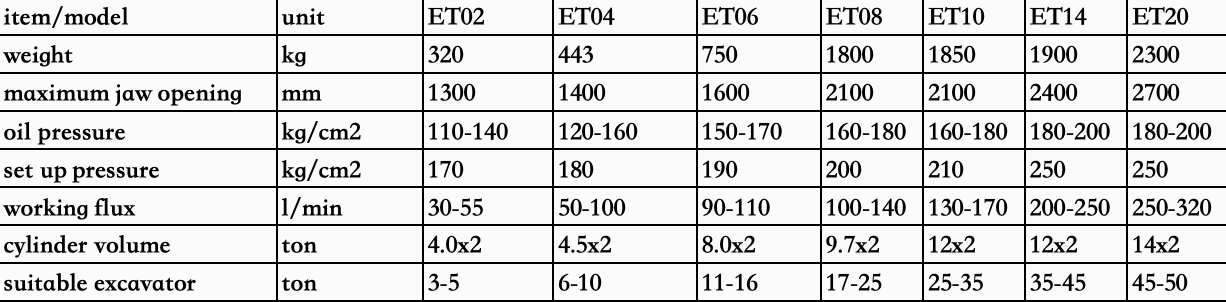
(4)There are single cylinder grab and double cylinder grab options, complete model size can be adapted to 5~35 tons of excavator, enhanced version of the structure design is more suitable for large load operation.
(5)The hydraulic parts are imported, the cylinder balance valve does not relieve pressure, good tension synchronization, large displacement rotary motor holding imported SUN balance valve has good braking performance, high frequency heat treatment gear and rotary support more durable.
(6)Oil cylinder rod diameter is 80mm and outer diameter is 170mm with Taiwan inlet balance valve, grasping force, do not drop the cylinder, good synchronization.
(7)The assembly shaft of the wood cutter is made of 42 Cr material with high frequency heat treatment, which has more durable wear resistance and high wear strength. The structural design does not need the processing of butter road to help avoid the shaft breaking.
(8)The rotary motor of the wood cutter adopts the American solar inlet balance valve, double overflow and double balance, the motor 600 displacement torque, very low failure rate, rotary support outer diameter 690mm, large tooth ring and small gear are 40 Cr plus high frequency heat treatment, continuous teeth are not broken.
(9)The structural parts of the wood grab are all reinforced design, with Q355B manganese plate, which is more durable for high strength operation in the port.
(10)The wood control system adopts streamlined design, the electric control wire harness and excavator with the same type of network design, resistant to large current impact, anti-aging, handle keys light and not tired hand, flexible and comfortable control, easy, the failure rate is very low, obvious advantages than similar products.