




Excavator Clam Shell Bucket
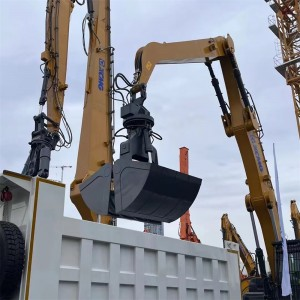
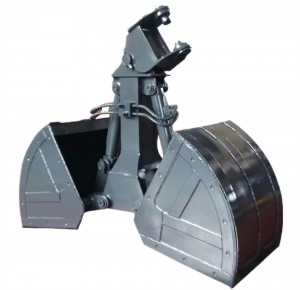
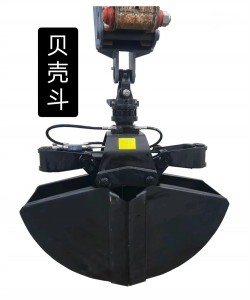
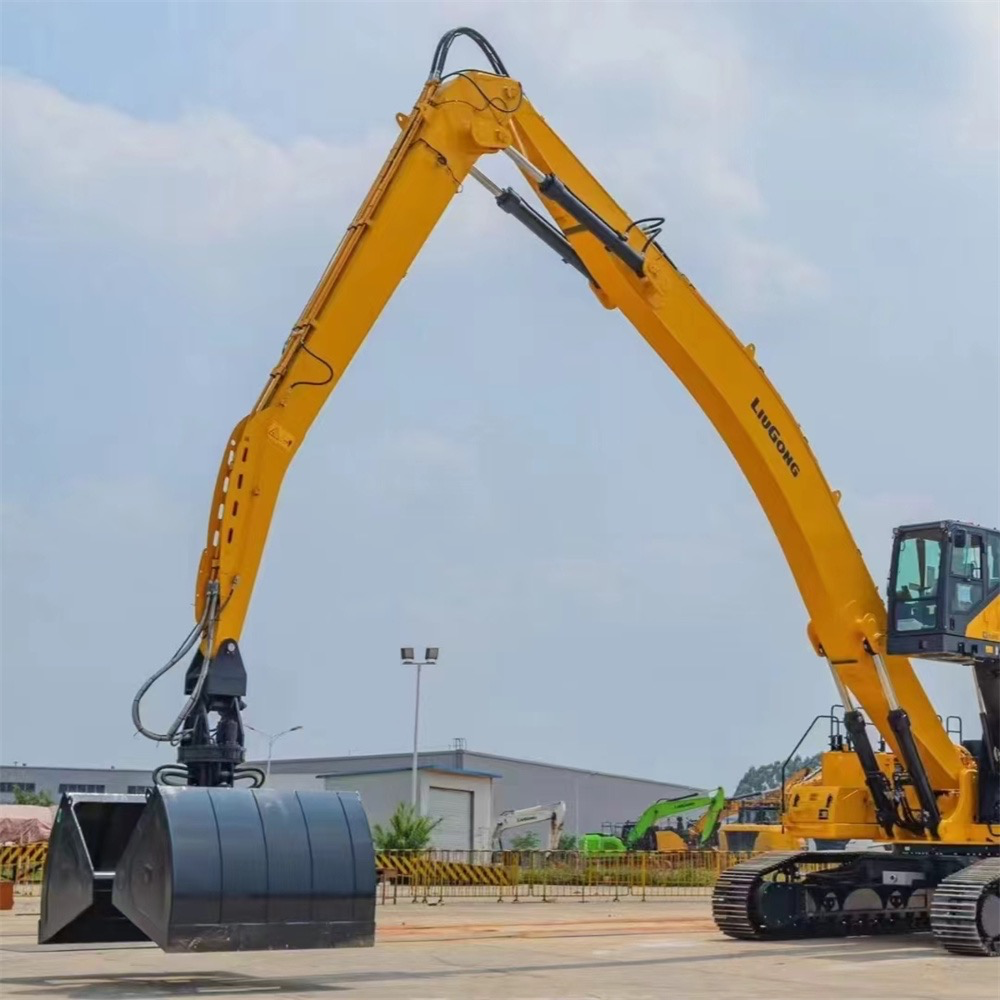
The Excavator Clam Shell Bucket (referred to as "clam shell bucket" below) is a specialized hydraulic attachment designed for excavators, dedicated to efficiently scooping, lifting, and transferring loose or bulk materials—such as sand, gravel, coal, soil, and construction waste. Unlike standard front-digging buckets, it features a "double-shell" structure (left and right shells) that opens and closes like a clam’s shell, enabling vertical or horizontal material capture even in narrow spaces (e.g., deep pits, silos, or ship holds). This design makes it a core tool in industries like construction, mining, port logistics, and environmental engineering. By leveraging the excavator’s hydraulic system, it delivers adjustable closing force (50–300 kN) to ensure full material loading, replacing inefficient manual shoveling or crane-mounted clamshells—significantly improving loading/unloading efficiency and operational flexibility.1. General Definition and Core Function
The Excavator Clam Shell Bucket (referred to as "clam shell bucket" below) is a specialized hydraulic attachment designed for excavators, dedicated to efficiently scooping, lifting, and transferring loose or bulk materials—such as sand, gravel, coal, soil, and construction waste. Unlike standard front-digging buckets, it features a "double-shell" structure (left and right shells) that opens and closes like a clam’s shell, enabling vertical or horizontal material capture even in narrow spaces (e.g., deep pits, silos, or ship holds). This design makes it a core tool in industries like construction, mining, port logistics, and environmental engineering. By leveraging the excavator’s hydraulic system, it delivers adjustable closing force (50–300 kN) to ensure full material loading, replacing inefficient manual shoveling or crane-mounted clamshells—significantly improving loading/unloading efficiency and operational flexibility.
2. Key Structural Components
2.1 Double-Shell Bucket Body
Material and Durability: Each shell is constructed from high-strength wear-resistant steel (AR400/AR500 for the inner contact surface; Q355B for the outer shell), with a Brinell hardness of 400–500 HB for the inner surface—resisting abrasion from sharp gravel or coal. The shell edges (closing contact points) are reinforced with 12–20 mm thick steel plates to prevent deformation after long-term collision. The shell bottom is designed with a "reinforced rib network" (spacing: 150–250 mm) to withstand the weight of bulk materials (e.g., 10 tons of gravel), extending the bucket’s service life to 3,000–4,000 operating hours.
Design Features: The shell shape is optimized for material retention—adopting a "hemispherical arc" design to minimize residual material (≤5% of total capacity) after unloading. The maximum opening angle of the double shells ranges from 120°–160°, with a capacity of 0.5–5.0 m³ (matching excavators of 5–50 tons). For sticky materials (e.g., wet soil), the inner shell surface is coated with a Teflon-like anti-adhesive layer to reduce material adhesion by 60–70%.
2.2 Hydraulic Opening/Closing Mechanism
Drive Cylinders: Equipped with 2–4 symmetrically installed hydraulic cylinders (bore diameter: 80–180 mm; stroke: 200–450 mm) to control shell movement. The cylinder barrels are made of 27SiMn seamless steel, and piston rods are chrome-plated (plating thickness ≥0.08 mm) to resist corrosion and scratch. Operating at a working pressure of 25–35 MPa, the cylinders generate a closing force of 50–300 kN—for example, a 20-ton excavator-mounted clam shell bucket (2.0 m³ capacity) can produce 180 kN of force, ensuring the shells fully close to capture 1.8–2.2 tons of gravel.
Linkage System: The cylinders connect to the shells via a "four-bar linkage" (composed of high-strength steel rods: 40CrNiMoA). This linkage converts the linear motion of the cylinders into the rotational motion of the shells, ensuring synchronized opening/closing (error ≤2°) to avoid material leakage. The linkage joints are equipped with self-lubricating bearings (bronze + molybdenum disulfide) to reduce friction—requiring only biweekly greasing.
2.3 Rotation System (Optional)
Hydraulic Rotator: Heavy-duty models (for 25–50 ton excavators) integrate a 360° hydraulic rotator, consisting of a low-speed high-torque (LSHT) motor (displacement: 500–1,500 mL/r) and a planetary gear reducer (reduction ratio: 60:1–100:1). The rotator delivers a torque of 15,000–40,000 N·m, enabling the bucket to rotate at 2–5 rpm—facilitating material unloading at any angle (e.g., rotating 90° to unload into a side-mounted truck). The rotator’s sealed structure (using nitrile rubber O-rings) prevents dust and water intrusion, suitable for outdoor or underwater operations (e.g., dredging).
Fixed vs. Rotating Models: Fixed models (without rotators) are lighter (10–15% less weight) and cheaper, suitable for simple vertical loading tasks (e.g., digging deep pits). Rotating models add 300–800 kg to the bucket weight but offer greater flexibility, ideal for port ship unloading or silo material transfer.
2.4 Mounting and Hydraulic Connection
Mounting Interface: Designed to match the excavator’s standard arm linkage (pin-on or quick-coupler). The mounting bracket is made of thickened steel (20–30 mm) and precision-drilled to ensure alignment with the excavator’s arm—reducing vibration during lifting. For quick-coupler compatibility (ISO 13031 or OEM standards), tool changes take 8–12 minutes, faster than traditional pin-on mounting (20–30 minutes).
Hydraulic Pipeline: Uses high-pressure steel wire braided hoses (DN20–DN38) with a working pressure of 40 MPa, covered with a polyurethane wear-resistant sleeve to resist impact from bulk materials. The pipeline has two independent circuits for the left and right shell cylinders (ensuring synchronized movement) and an additional circuit for the rotator (if equipped). Quick-disconnect couplings (ISO 7241-1 B-series) with self-sealing valves prevent oil leakage when disconnecting—avoiding environmental pollution.
3. Working Principle
3.1 Hydraulic Power Transmission
The excavator’s main hydraulic pump supplies high-pressure oil (25–35 MPa) to the bucket’s cylinders via a multi-way valve. The operator controls the oil flow direction using a dedicated lever: pushing the lever forward sends oil to the rodless cavity of the cylinders, extending the pistons and driving the shells to close; pulling the lever backward sends oil to the rod cavity, retracting the pistons and opening the shells. For rotating models, a secondary lever controls the rotator motor’s oil flow, adjusting the rotation direction and speed.
3.2 Material Handling Process
Opening and Positioning: The operator opens the shells to the maximum angle (120°–160°) and lowers the bucket to the material surface (e.g., gravel pile, deep pit bottom) using the excavator’s boom and arm. For deep pits (≥5 meters), the bucket is lowered vertically to avoid collision with the pit wall.
Closing and Capturing: The shells are closed to scoop the material— the arc-shaped shell design wraps around the bulk material, and the closing force is adjusted based on material density (e.g., 80 kN for sand, 150 kN for gravel) to ensure full loading without overloading the cylinders.
Lifting and Transferring: The excavator lifts the loaded bucket to the target height (e.g., truck bed, silo inlet) and moves it to the unloading point. Rotating models adjust the bucket angle via the rotator to align with the unloading port—reducing the need to reposition the entire excavator.
Opening and Unloading: The shells are opened to discharge the material— the anti-adhesive inner surface ensures rapid material release (unloading time ≤3 seconds for non-sticky materials). For sticky soil, the shells can be slightly shaken (by quickly opening and closing) to remove residual material.
4. Classification by Application
4.1 Light-Duty Clam Shell Bucket
Key Features: Designed for small excavators (5–12 tons), with a capacity of 0.5–1.2 m³ and a closing force of 50–100 kN. The shells are made of lighter Q355B steel (without AR400 reinforcement) to reduce weight (300–800 kg). Suitable for handling light bulk materials (e.g., sand, dry soil, or construction waste).
Application Scenarios: Residential construction (digging and loading foundation soil), landscaping (transferring decorative gravel), and municipal engineering (cleaning ditch sediment). A 8-ton excavator-mounted light-duty bucket can load 8–12 tons of sand per hour, meeting the needs of small-scale construction sites.
4.2 Medium-Duty Clam Shell Bucket
Key Features: For mid-sized excavators (12–25 tons), with a capacity of 1.2–2.5 m³ and a closing force of 100–200 kN. The inner shell surface uses AR400 wear-resistant steel, and the linkage system is reinforced with 40CrNiMoA rods. Suitable for medium-density materials (e.g., gravel, coal, or ore fragments).
Application Scenarios: Road construction (loading road base gravel), industrial plants (transferring coal to boilers), and quarries (loading crushed stone). A 20-ton excavator-mounted medium-duty bucket can process 20–30 tons of gravel per hour, matching the efficiency of small-scale transport trucks.
4.3 Heavy-Duty Clam Shell Bucket
Key Features: For large excavators (25–50 tons), with a capacity of 2.5–5.0 m³ and a closing force of 200–300 kN. The shells are fully reinforced with AR500 steel (inner surface and edges), and the linkage system uses thickened rods (diameter ≥50 mm). Equipped with a 360° rotator as standard, suitable for heavy and abrasive materials (e.g., iron ore, granite chips, or wet clay).
Application Scenarios: Mining (loading ore into transport vehicles), port logistics (unloading coal or grain from ships), and large-scale construction (digging and loading foundation rock fragments). A 35-ton excavator-mounted heavy-duty bucket can load 40–60 tons of iron ore per hour, meeting the needs of large industrial projects.
4.4 Specialized Dredging Clam Shell Bucket
Key Features: Optimized for underwater operations (e.g., river/lake dredging), with a corrosion-resistant design (shells coated with epoxy zinc-rich paint) and a water-tight rotator (IP68 protection). The inner shell has a "screen mesh" design to filter water during sediment capture—reducing weight during lifting.
Application Scenarios: Environmental engineering (dredging river sediment to improve water quality), port maintenance (clearing underwater silt in docks), and water conservancy projects (deepening irrigation channels). A 25-ton excavator-mounted dredging bucket can dredge 15–25 cubic meters of sediment per hour.
5. Practical Applications and Advantages
5.1 Efficiency Improvement: High Loading Capacity
Bulk Material Efficiency: Compared to standard front-digging buckets (which require horizontal scraping), clam shell buckets capture material vertically—loading efficiency is 30–50% higher for bulk materials. For example, loading 100 tons of gravel takes 4–6 hours with a front bucket, but only 2–3 hours with a clam shell bucket.
Narrow Space Adaptability: In deep pits (≥5 meters) or silos (diameter ≤3 meters), the vertical operation of clam shell buckets avoids space constraints—unlike front buckets, which require wide horizontal space to scrape material. This reduces the need for pit expansion or silo modification, saving project costs by 20–30%.
5.2 Versatility: Multi-Material and Multi-Scene Adaptation
Material Compatibility: Handles almost all loose/bulk materials, from light sand (density 1.2 t/m³) to heavy iron ore (density 4.5 t/m³)—by adjusting the closing force and shell design. This eliminates the need to purchase multiple dedicated buckets (e.g., sand buckets, gravel buckets), reducing equipment investment by 40–60%.
Environmental Adaptability: Fixed models are suitable for dry land operations (e.g., construction sites), while rotating and dredging models work in ports, water bodies, or mines. The anti-adhesive and corrosion-resistant designs ensure stable operation in wet, dusty, or corrosive environments (e.g., coastal ports with salt spray).
5.3 Cost Savings: Lower Operational Expenses
Labor Reduction: A single excavator operator can complete loading/unloading tasks that previously required 2–3 workers (manual shoveling + machine operation). For example, a port coal unloading task that needed 3 workers now only requires 1 operator, reducing annual labor costs by 30,000–50,000.
Maintenance Savings: The simple linkage system (fewer moving parts than grabs) reduces maintenance frequency—greasing every 8 hours (vs. 4 hours for grabs) and fewer component replacements. The wear-resistant steel shell extends the replacement cycle to 3–4 years (vs. 1–2 years for standard buckets), lowering maintenance costs by 30–40%.
6. Operational and Maintenance Considerations
6.1 Excavator Matching Requirements
Weight and Capacity: The bucket’s weight should not exceed 15–20% of the excavator’s operating weight (e.g., a 12-ton excavator should use a bucket weighing ≤2.4 tons). Overloading causes the excavator’s arm to sag, increasing fuel consumption by 15–20% and accelerating arm cylinder wear. The bucket capacity should match the excavator’s lifting power (e.g., a 25-ton excavator can handle a 2.5–3.0 m³ bucket).
Hydraulic Compatibility: The excavator’s hydraulic flow should be 40–100 L/min (matching the bucket’s cylinder flow requirement). If the flow is too low, the shell opening/closing speed slows down (reducing efficiency by 25–35%); if too high, the cylinders overheat (shortening service life by 50%). Rotating models require an additional hydraulic circuit (flow 20–40 L/min) for the rotator.
6.2 Routine Maintenance
Shell and Linkage Maintenance: Inspect the shell edges for deformation and the inner surface for wear daily—weld AR400 patches to worn areas (wear depth ≥5 mm) and replace bent linkage rods immediately. For dredging models, rinse the shell and rotator with fresh water after underwater operation to remove sediment and salt.
Hydraulic System Inspection: Check the cylinder piston rods for scratches or corrosion weekly—apply anti-rust oil if needed. Inspect hydraulic hoses and couplings for leaks or cracks every 3 days; replace damaged hoses (using hoses rated for 40 MPa) to avoid bursts during high-pressure operation.
Lubrication: Grease the linkage joints and rotator (if equipped) every 8 hours of operation (using lithium-based grease NLGI 3). For self-lubricating bearings, add grease every 2 weeks to ensure smooth movement.
6.3 Safety Operation Rules
Operator Training: Operators must master the synchronization of shell opening/closing and excavator movement—avoid closing the shells too forcefully (which can bend the linkage) or lifting overloaded materials (exceeding the excavator’s lifting capacity). Training should include emergency procedures (e.g., cutting off hydraulic power if the shells jam).
On-Site Safety: Before operation, check the material for foreign objects (e.g., steel bars, large rocks) to avoid damaging the shells. When lifting the bucket to a high height (≥8 meters), use a load cell to confirm the weight—never guess. Keep personnel at least 6 meters away from the bucket’s working range to prevent injury from falling material. For underwater dredging, ensure the excavator is stable on the bank or barge to avoid tipping.
