



Skid Steer Loader Grass Grapple
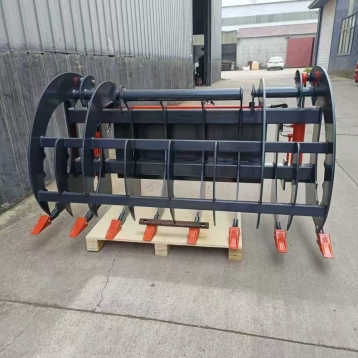
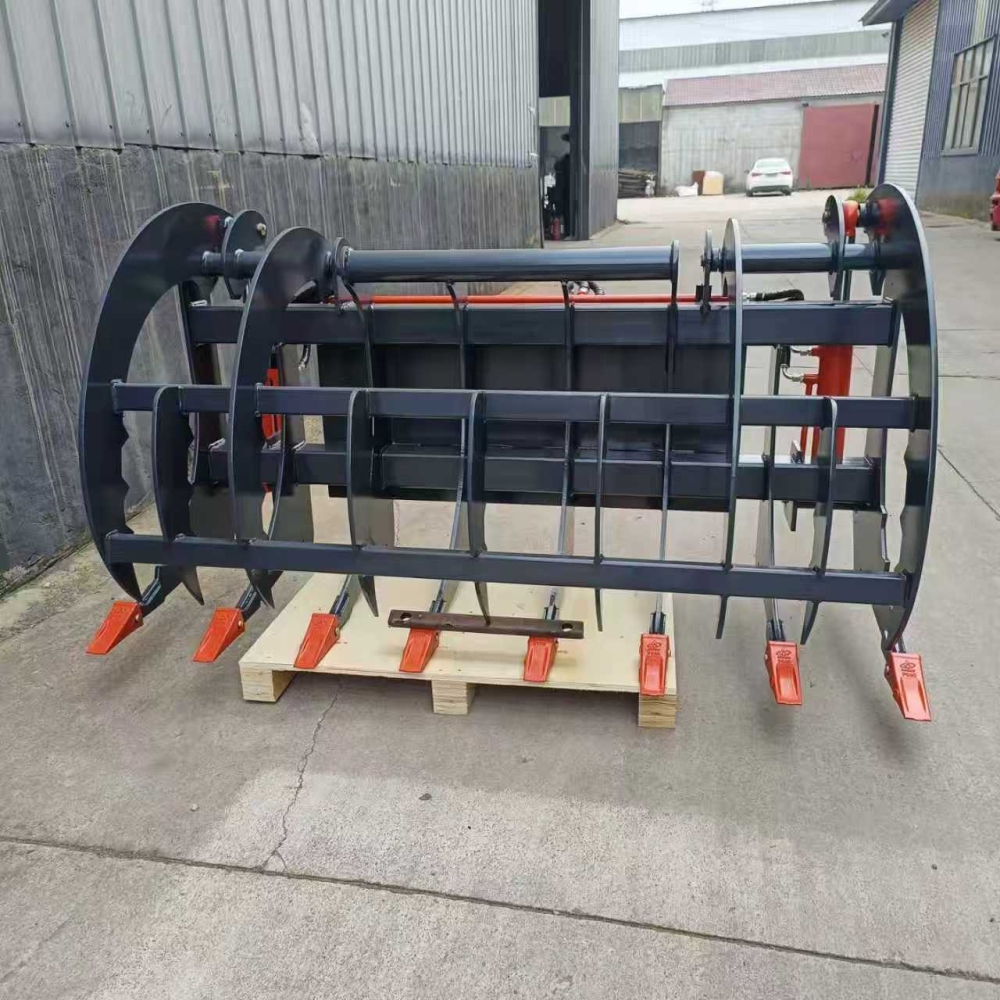
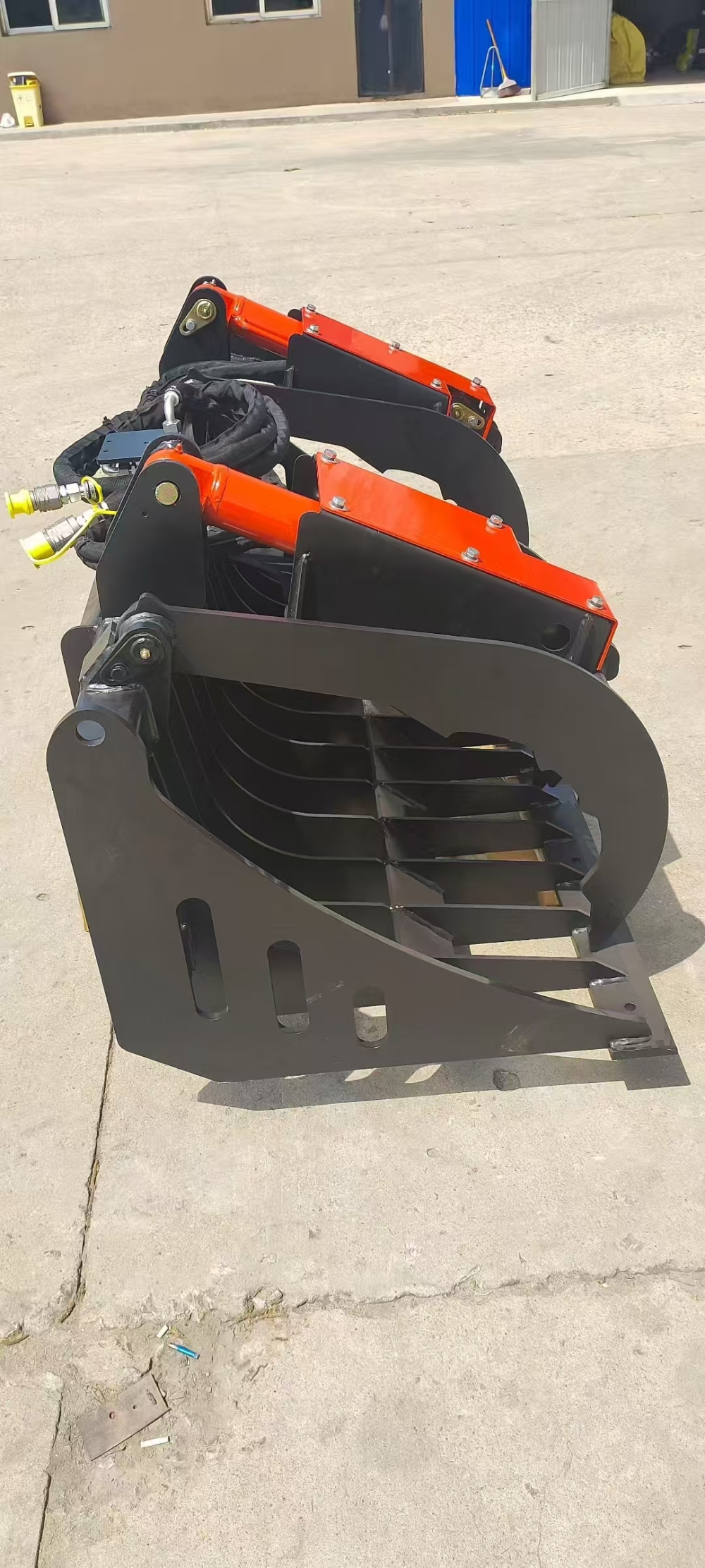
The Skid Steer Loader Grass Grapple is a specialized hydraulic attachment engineered for skid steer loaders, designed to efficiently grasp, lift, transport, and stack loose or bulky vegetation materials such as hay bales, straw, grass clippings, branches, and compost. Unlike standard buckets that struggle with lightweight or irregularly shaped forage, this attachment features a dual-clamp or tine-based structure that provides flexible yet secure gripping force—preventing material spillage during movement. It is widely used in agriculture (livestock feeding, hay management), landscaping (yard waste cleanup), forestry (brush clearing), and waste management (compost handling). By leveraging the skid steer’s compact mobility and hydraulic power, it replaces labor-intensive manual handling (e.g., 2–3 workers using pitchforks) and reduces operation time by 60–80% for tasks like hay bale stacking or grass collection.1. General Definition and Core Function
The Skid Steer Loader Grass Grapple is a specialized hydraulic attachment engineered for skid steer loaders, designed to efficiently grasp, lift, transport, and stack loose or bulky vegetation materials such as hay bales, straw, grass clippings, branches, and compost. Unlike standard buckets that struggle with lightweight or irregularly shaped forage, this attachment features a dual-clamp or tine-based structure that provides flexible yet secure gripping force—preventing material spillage during movement. It is widely used in agriculture (livestock feeding, hay management), landscaping (yard waste cleanup), forestry (brush clearing), and waste management (compost handling). By leveraging the skid steer’s compact mobility and hydraulic power, it replaces labor-intensive manual handling (e.g., 2–3 workers using pitchforks) and reduces operation time by 60–80% for tasks like hay bale stacking or grass collection.
2. Key Structural Components
2.1 Gripping Mechanism (Core Working Unit)
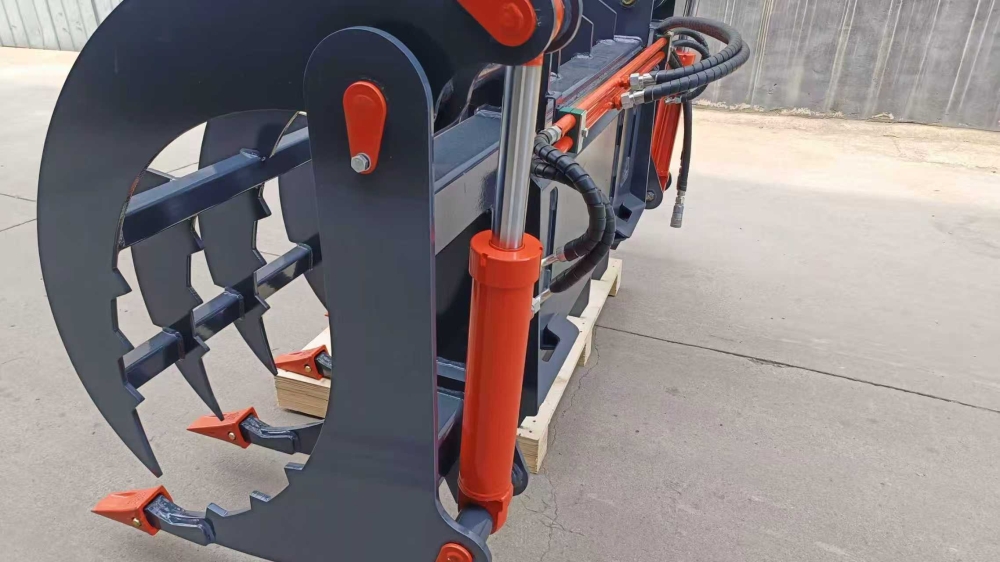
Dual-Clamp Design: The most common configuration, consisting of a fixed lower bucket and a movable upper clamp. Both components are made of high-strength Q355B steel (thickness: 8–12 mm) with reinforced welds at stress points to withstand repeated clamping. The upper clamp is equipped with 3–8 curved tines (length: 200–400 mm) made of forged alloy steel (40Cr), which curve inward to "wrap" around materials—ensuring a secure grip even on loose grass or hay. For example, a 72-inch (1830 mm) wide model (like BONOVO’s design) can grip hay bales up to 1.2 m in diameter or 200 kg of loose grass.
Tine Configuration: Tines feature a replaceable carbide tip (WC-Co alloy) to resist wear from rough branches or debris. The spacing between tines varies by application: 50–80 mm for fine grass/clippings (preventing small materials from falling through) and 100–150 mm for large hay bales or logs. Some models offer adjustable tine angles (±15°) via hydraulic cylinders to adapt to different material shapes.
2.2 Hydraulic Drive System
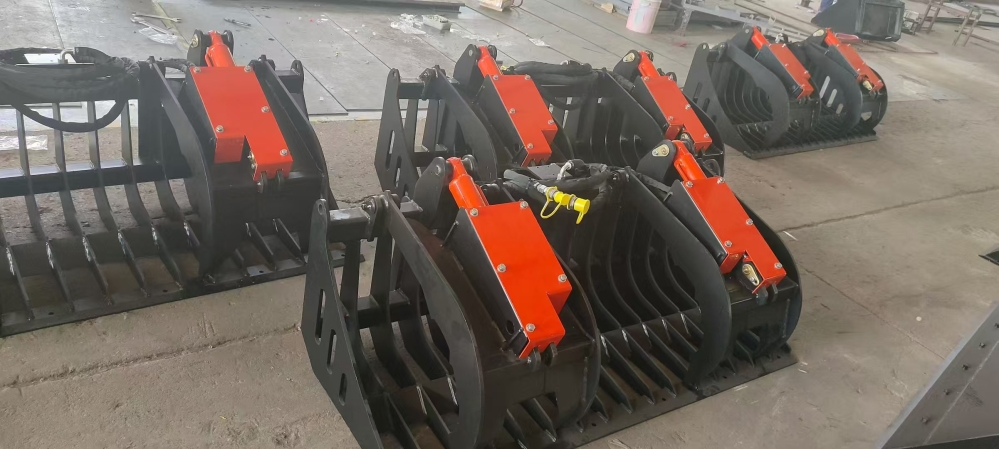
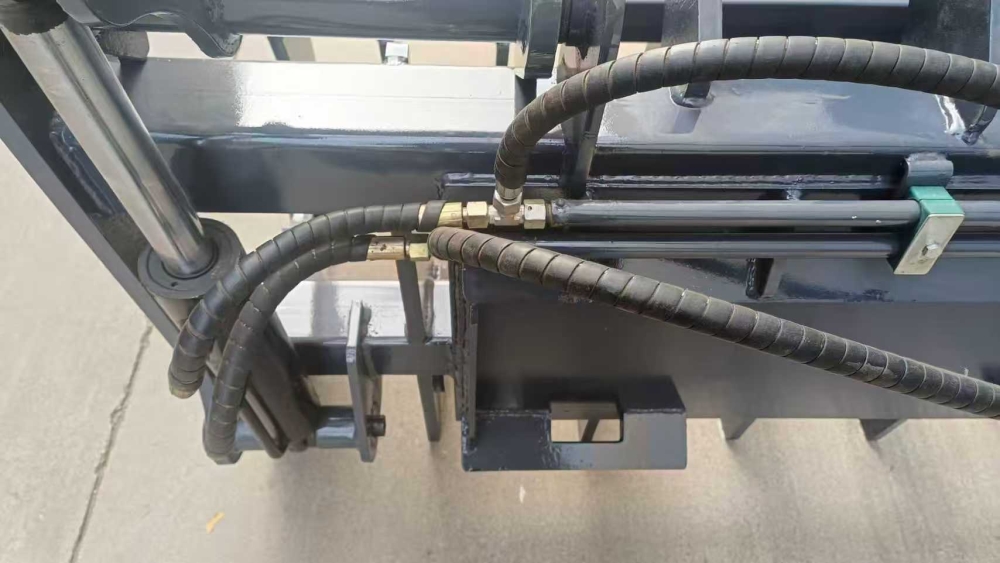
Clamping Cylinders: 1–2 double-acting hydraulic cylinders (bore diameter: 50–80 mm; stroke: 150–300 mm) power the upper clamp’s opening and closing. Operating at a working pressure of 15–20 MPa (150–200 kg/cm²) and requiring a hydraulic flow of 90–110 L/min, they generate a clamping force of 8–25 kN—sufficient to hold 500 kg hay bales without deformation. The cylinders use chrome-plated piston rods (plating thickness ≥0.05 mm) and nitrile rubber seals to resist corrosion and dust, suitable for outdoor use in humid or dusty environments.
Control Valves: Integrated with a check valve to lock the clamp position if hydraulic pressure drops (e.g., hose leakage), preventing accidental material release. High-end models add a proportional flow valve to adjust clamping speed (50–100 mm/s), allowing gentle handling of fragile materials like fresh grass clippings.
2.3 Mounting and Frame Structure
Universal Quick-Coupler: Designed to fit standard skid steer quick-couplers (ISO 13031 or OEM-specific like Bobcat’s), enabling tool changes in 2–3 minutes. The mounting bracket is reinforced with gussets (thickness: 15–20 mm) to absorb vibration during clamping and lifting, reducing stress on the skid steer’s lift arm.
Frame Reinforcement: The main frame uses box-section steel (100×100×8 mm) for rigidity, with cross-members spaced 300–400 mm apart to distribute load evenly. For heavy-duty models, the frame is coated with epoxy zinc-rich primer (dry film thickness: 60–80 μm) to resist rust from fertilizer or manure exposure.
2.4 Safety and Auxiliary Components
Safety Guards: A steel plate (thickness: 5–6 mm) covers the hydraulic hoses and cylinder rods to prevent damage from flying debris. Some models include a pressure relief valve to limit maximum clamping force, avoiding tine deformation when gripping hard objects like rocks.
Skid Pads: Installed at the bottom of the lower bucket (made of AR400 wear-resistant steel), they protect the bucket from wear when sliding over concrete or gravel surfaces—extending service life by 30% compared to unprotected designs.
3. Working Principle
3.1 Hydraulic Power Transmission
The skid steer’s hydraulic pump supplies high-pressure oil to the clamping cylinders via the control valve. The operator uses a dedicated lever in the cab to control the clamp:
Opening: Pushing the lever forward sends oil to the rod cavity of the cylinders, retracting the piston rods and opening the upper clamp to 1600 mm (max jaw opening) for material loading.
Clamping: Pulling the lever backward directs oil to the cap cavity, extending the piston rods and closing the clamp until the tines grip the material. The check valve maintains pressure to hold the clamp position during lifting and transport.
Adjustment: For uneven materials (e.g., sloped grass piles), the operator fine-tunes the clamp pressure by modulating the lever, ensuring a secure grip without crushing.
3.2 Typical Operation Process
Material Approach: The skid steer maneuvers to the material pile, with the grapple clamp fully open (1200–1600 mm) and the lower bucket lowered to the ground.
Gripping: The operator drives the lower bucket into the material (e.g., a hay bale or grass pile) and pulls the clamp lever to close the upper tines—applying enough pressure to hold the material securely (indicated by hydraulic pressure gauges showing 12–15 MPa).
Lifting and Transport: The skid steer’s lift arm raises the grapple to the desired height (2–3 meters for stacking) and moves to the target location. The compact size of skid steers allows navigation through narrow farm aisles (≤1.5 meters wide) or between landscaping beds.
Release: At the target site, the operator pushes the clamp lever forward to open the tines, releasing the material onto a stack, truck bed, or compost pile. For precise placement (e.g., feeding livestock), the proportional valve slows the clamp opening speed to avoid spilling.
4. Classification by Application
4.1 Light-Duty Grass Grapple
Key Features: Designed for compact skid steers (500–1000 kg operating weight) with a grapple width of 32–55 inches (810–1397 mm) and operating weight of 157–180 lb (71–82 kg). It has 3–4 tines (spacing: 50–80 mm) and a clamping force of 8–12 kN, suitable for grass clippings, small hay bales (≤100 kg), and garden waste.
Application Scenarios: Residential landscaping (yard cleanup after mowing), small-scale farming (feeding sheep or goats), and municipal parks (collecting fallen leaves). A 32-inch model can handle 50–80 kg of fresh grass clippings per load, completing a 1000 m² lawn cleanup in 1–2 hours.
4.2 Medium-Duty Grass Grapple
Key Features: For mid-sized skid steers (1000–2000 kg operating weight) with a width of 55–72 inches (1397–1830 mm) and weight of 243–300 lb (110–136 kg). It has 4–6 tines (spacing: 80–120 mm) and a clamping force of 12–20 kN, handling hay bales up to 300 kg and brush piles 1.5 m in diameter.
Application Scenarios: Commercial agriculture (hay stacking for cattle farms), vineyard maintenance (clearing pruned branches), and golf course landscaping (collecting grass clippings from fairways). A 72-inch model can stack 10–12 hay bales (200 kg each) per hour—6 times faster than manual stacking.
4.3 Heavy-Duty Grass Grapple
Key Features: For large skid steers (2000–3000 kg operating weight) with a width of 72–96 inches (1830–2440 mm) and weight of 300–450 lb (136–204 kg). It has 6–8 reinforced tines (spacing: 120–150 mm) and a clamping force of 20–25 kN, suitable for logs up to 200 mm diameter and 800 kg hay bales.
Application Scenarios: Large-scale livestock operations (feeding dairy cows), forestry brush clearing, and waste management (compost pile turning). A 96-inch model can clear 500–800 m² of dense brush per hour, replacing 4–5 manual laborers.
5. Practical Applications and Advantages
5.1 Efficiency Enhancement in Agriculture and Landscaping
Time Savings: Manual stacking of 100 hay bales (200 kg each) takes 4–6 hours (2 workers), while a medium-duty grapple completes the task in 1 hour—reducing labor time by 75%. For grass clipping collection in a 5-hectare park, manual cleanup takes 2 days, while the grapple finishes in 4 hours.
Labor Reduction: A single skid steer operator with a grapple replaces 3–4 workers for material handling tasks, significantly cutting annual labor costs for farms or landscaping companies.
5.2 Material Handling Versatility
Multi-Material Adaptability: Unlike dedicated hay forks or brush cutters, the grapple handles grass, hay, branches, and compost with minimal adjustments. For example, a farm can use the same attachment to feed livestock in the morning, clear brush in the afternoon, and collect compost in the evening—eliminating the need for 3 separate tools.
Terrain Flexibility: Skid steers’ zero-turn radius combined with the grapple’s compact design allows operation in tight spaces: narrow farm lanes (≤1.2 meters), between greenhouse rows, or on sloped lawns (up to 25° incline)—areas where tractors or wheel loaders cannot access.
5.3 Cost and Safety Benefits
Equipment Cost Savings: Investing in one grapple is cheaper than purchasing separate hay forks, brush grapples, and compost turners—saving 40–50% of attachment costs.
Safety Improvement: Operators remain in the skid steer cab (1.5–2 meters above ground) during operation, avoiding risks of back strain from lifting or injury from falling branches. The check valve and safety guards reduce accident rates by 90% compared to manual handling.
6. Operational and Maintenance Considerations
6.1 Skid Steer Matching Requirements
Weight and Capacity: The grapple’s weight should not exceed 15% of the skid steer’s operating weight (e.g., a 1000 kg skid steer uses a grapple ≤150 kg). Overloading causes the lift arm to sag, increasing fuel consumption by 10–15% and accelerating hydraulic pump wear. The grapple’s width should match the skid steer’s wheelbase (e.g., 55-inch grapple for 1.5-meter wheelbase) to maintain stability during turns.
Hydraulic Compatibility: The skid steer must provide a hydraulic flow of 70–120 L/min and pressure of 15–25 MPa to power the clamping cylinders. Older models without auxiliary hydraulics require a conversion kit to add a control valve and lever.
6.2 Routine Maintenance
Lubrication: Grease the clamp pivot tubes every 40 operating hours (and before/after the first 8 hours) using lithium-based grease (NLGI 2). Each pivot tube has 2 grease fittings—ensure thorough lubrication to prevent metal-on-metal wear.
Hydraulic Inspection: Check hoses and couplings weekly for leaks. Use cardboard (not hands) to detect small leaks, as high-pressure fluid can penetrate skin. Replace damaged hoses with 40 MPa-rated steel-braided hoses. Change the hydraulic oil filter every 1,000 hours and use oil meeting ISO VG 46 standards.
Tine and Frame Care: Inspect tines for wear or bending daily—replace tips when wear depth exceeds 3 mm. Check welds monthly for cracks; repair small cracks with E5015 electrodes. Clean the grapple after use to remove manure or fertilizer residue, which can cause corrosion.
6.3 Safety Operation Rules
Pre-Operation Checks: Lower the grapple to the ground, disengage power, and release hydraulic pressure before inspecting or servicing. Never place body parts between the clamp and bucket, even with the engine off—hydraulic leak-down can cause sudden movement.
On-Site Safety: Keep personnel at least 5 meters away from the working area to avoid injury from flying debris. When lifting materials, do not exceed the skid steer’s lift capacity (e.g., 1500 kg for a mid-sized model) or raise the grapple above eye level. Avoid operating on slopes steeper than 25° to prevent tipping.