



Forestry Mulcher Attachment
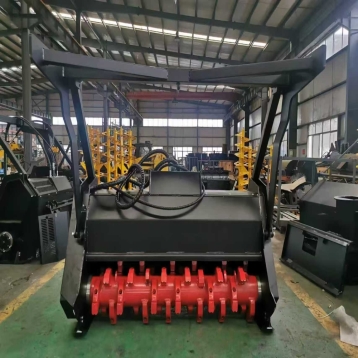
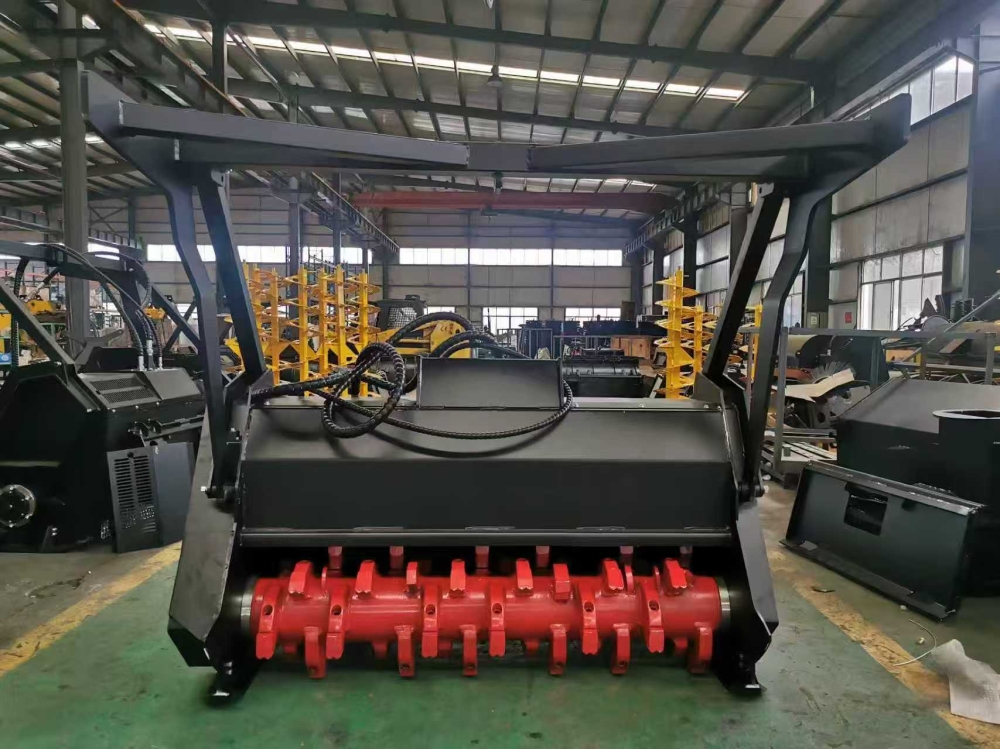
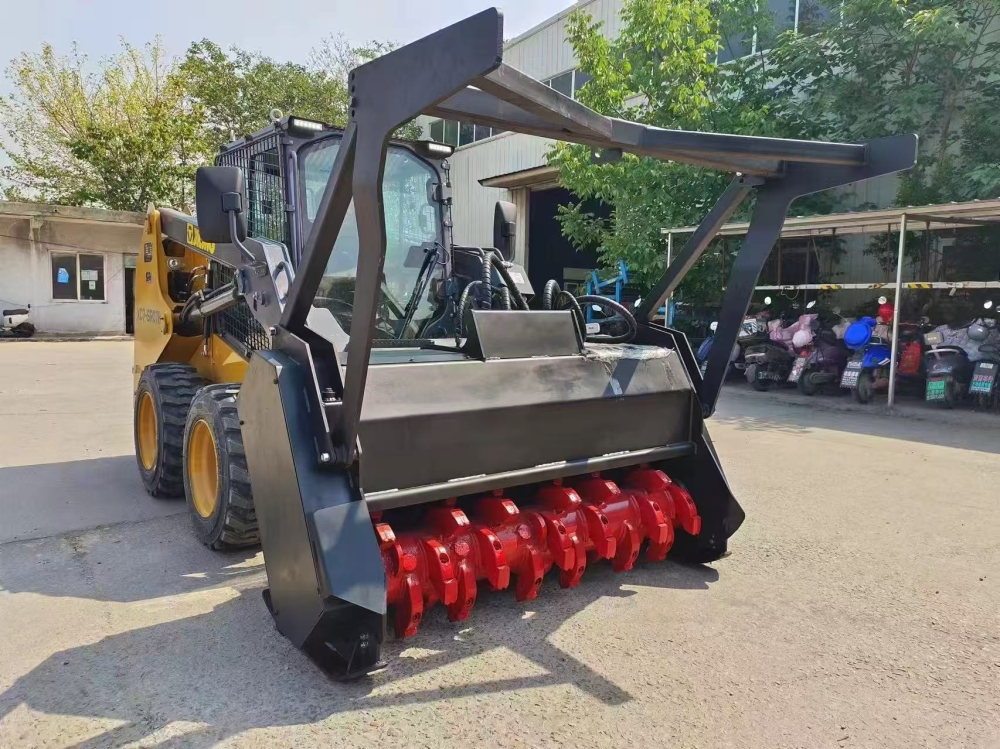
A forestry mulcher attachment is a specialized hydraulic tool designed to be mounted on heavy machinery such as excavators, skid steer loaders, or tractors, dedicated to efficiently grinding, shredding, and mulching woody vegetation in forestry and land management applications. Unlike standalone mulching machines limited by mobility, this attachment leverages the host machine’s reach, maneuverability, and power to operate in diverse terrains—including dense forests, steep slopes, wetland edges, and construction sites with overgrown vegetation. Its core function is to reduce trees, branches, shrubs, and brush into fine, uniform mulch (typically 20–100 mm in size), which can be left on-site to improve soil health, prevent erosion, and suppress weed growth. Widely used in forest thinning, land clearing, wildfire fuel reduction, and ecological restoration, it replaces labor-intensive manual cutting and hauling, boosting operation efficiency by 60–80% while minimizing environmental disturbance.A forestry mulcher attachment is a specialized hydraulic tool designed to be mounted on heavy machinery such as excavators, skid steer loaders, or tractors, dedicated to efficiently grinding, shredding, and mulching woody vegetation in forestry and land management applications. Unlike standalone mulching machines limited by mobility, this attachment leverages the host machine’s reach, maneuverability, and power to operate in diverse terrains—including dense forests, steep slopes, wetland edges, and construction sites with overgrown vegetation. Its core function is to reduce trees, branches, shrubs, and brush into fine, uniform mulch (typically 20–100 mm in size), which can be left on-site to improve soil health, prevent erosion, and suppress weed growth. Widely used in forest thinning, land clearing, wildfire fuel reduction, and ecological restoration, it replaces labor-intensive manual cutting and hauling, boosting operation efficiency by 60–80% while minimizing environmental disturbance.
Key Structural Components
2.1 Mulching Drum Assembly (Core Working Unit)
Drum Design & Material: The primary working component is a heavy-duty steel drum (diameter: 400–1,000 mm; length: 800–2,200 mm) constructed from Q355B or S690QL high-strength steel. The drum’s surface is embedded with cutting tools—either fixed teeth, swinging hammers, or carbide-tipped chipper blades. Fixed teeth (typically 24–48 per drum) are ideal for dense brush, while swinging hammers handle larger branches and small trunks by absorbing impact. Carbide-tipped blades (used in high-performance models) offer superior wear resistance, lasting 3–5 times longer than standard steel when processing hardwoods like oak or maple.
Anti-Clogging Features: The drum is engineered with spiral or staggered tool arrangements and curved deflector plates to guide vegetation toward the cutting edges and eject mulch smoothly. Drainage holes in the drum prevent water accumulation when working in wet conditions, reducing weight and avoiding material clumping.
2.2 Hydraulic Drive System
High-Torque Hydraulic Motor: Powered by the host machine’s auxiliary hydraulic system, the motor is typically a low-speed, high-torque (LSHT) axial piston type. It operates at a working pressure of 20–30 MPa and requires a hydraulic flow of 50–120 L/min, delivering sufficient torque (500–3,000 N·m) to drive the drum at 1,200–3,000 rpm. Some large-scale models integrate a dedicated hydraulic pump to supplement power for grinding thick trunks (up to 400 mm diameter).
Control Valves: Equipped with pressure relief valves to protect the motor from overloading (e.g., when encountering rocks or metal debris hidden in vegetation). Proportional flow valves allow operators to adjust drum speed—slower for tough, large-diameter material and faster for light brush—optimizing both efficiency and tool life.
2.3 Mounting & Safety Structures
Universal Mounting Bracket: Designed to fit standard quick-couplers (ISO 13031 for excavators/skid steers) or pin-on linkages, enabling tool changes in 5–10 minutes. The bracket is reinforced with gussets (15–25 mm thick) to absorb vibration from high-speed drum rotation, reducing stress on the host machine’s arm or lift frame.
Protective Housing: A heavy-duty steel cover (8–12 mm thick) surrounds the drum to contain flying debris, with rubber or chain curtains along the bottom edge to minimize mulch scatter and protect the operator. Side guards and rear deflectors further enhance safety by directing mulch downward and away from the machine.
Working Principle
The forestry mulcher attachment operates through a combination of hydraulic power transmission and mechanical cutting:
Power Activation: The host machine’s hydraulic pump supplies high-pressure oil to the mulcher’s motor, which converts hydraulic energy into rotational mechanical energy to spin the drum.
Vegetation Engagement: The operator maneuvers the host machine to press the rotating drum against the target vegetation. The drum’s teeth or blades make initial contact, slicing through branches and small trunks.
Mulching Process: As the drum continues to rotate, the cutting tools repeatedly chop and grind the vegetation into smaller fragments. Centrifugal force generated by the drum’s high speed ejects the mulch outward and downward, ensuring even distribution on the ground.
Adaptation to Material: The hydraulic system automatically adjusts torque based on resistance—if the drum encounters a thick trunk, pressure increases to maintain rotation, preventing stalling; for light brush, the drum speeds up to cover more area quickly.
Classification by Host Machine & Application
3.1 Excavator-Mounted Forestry Mulcher
Key Features: Designed for excavators (6–30 tons) with extendable arms, offering a reach of 6–15 meters. The drum length ranges from 1,000–2,200 mm, and it can handle trunks up to 400 mm diameter. Ideal for working in hard-to-reach areas like steep slopes, ravines, or underbrush.
Application Scenarios: Forest thinning (removing small, overcrowded trees), clearing storm-damaged vegetation, and creating fire breaks in mountainous forests.
3.2 Skid Steer-Mounted Forestry Mulcher
Key Features: Compact design for skid steer loaders (1–5 tons), with drum lengths of 800–1,200 mm and a maximum trunk capacity of 200 mm diameter. The host machine’s zero-turn radius allows navigation in tight spaces like between trees or in urban greenbelts.
Application Scenarios: Urban forestry (trimming park underbrush), residential land clearing, and maintaining utility right-of-ways (clearing vegetation around power lines).
3.3 Tractor-Mounted Forestry Mulcher
Key Features: Mounted on the rear three-point hitch of tractors (30–100 HP), with a wide working width (1,500–2,200 mm) for large-area coverage. Suitable for flat or gently sloped terrain and can be paired with a front loader for debris handling.
Application Scenarios: Agricultural land clearing (converting forested areas to farmland), maintaining plantation rows (e.g., palm oil or fruit orchards), and rural road verge management.
Practical Applications & Advantages
4.1 Forestry Management
Forest Thinning: Selectively removes small trees and underbrush to improve sunlight penetration and tree growth, reducing competition for resources. The mulch left behind enriches the soil with organic matter, promoting healthy forest ecosystems.
Wildfire Fuel Reduction: Creates fire breaks by clearing dense vegetation that acts as fuel for wildfires. The fine mulch layer is less flammable than intact brush, helping to slow or stop fire spread.
4.2 Land Development & Construction
Site Clearing: Prepares construction sites, solar farms, or residential developments by removing trees and brush without the need for hauling and disposing of debris—saving time and landfill costs.
Erosion Control: The mulch layer retains soil moisture and prevents erosion on newly cleared slopes, stabilizing the terrain until permanent vegetation is established.
4.3 Urban & Rural Landscaping
Park & Greenbelt Maintenance: Trims overgrown underbrush in public parks and green spaces, improving aesthetics and accessibility while reducing pest habitats.
Utility Right-of-Way Management: Clears vegetation around power lines, pipelines, and railways to prevent service disruptions, with the mulcher’s precision avoiding damage to infrastructure.
Operational & Maintenance Considerations
5.1 Host Machine Compatibility
Weight & Power Match: The mulcher’s weight should not exceed 20% of the host machine’s operating weight (e.g., a 10-ton excavator uses a ≤2-ton mulcher) to avoid overloading the lift arm or causing instability. The host’s hydraulic flow and pressure must meet the mulcher’s requirements—insufficient flow will result in slow drum rotation and poor mulching performance.
Terrain Adaptability: For steep slopes (≥25°), use excavator-mounted models with stable tracks and extendable arms; skid steer-mounted models are better for flat or gently sloped terrain with good traction.
5.2 Routine Maintenance
Cutting Tool Care: Inspect teeth/blades daily for wear, dullness, or damage. Sharpen steel blades every 20–40 operating hours and replace carbide tips when they are worn down to 50% of their original size. Balance the drum after replacing tools to reduce vibration.
Hydraulic System Checks: Examine hoses, couplings, and seals weekly for leaks or cracks. Replace damaged hoses with high-pressure (≥40 MPa) steel-braided versions. Grease pivot points and bearings every 8–12 operating hours using lithium-based grease (NLGI 2).
Cleaning & Storage: Remove debris from the drum housing and mounting bracket after each use to prevent corrosion. Store the mulcher in a dry, covered area when not in use, and apply a rust inhibitor to exposed steel parts.
5.3 Safety Protocols
Operator Training: Operators must be trained to handle both the host machine and the mulcher attachment, including understanding drum speed control, torque adjustment, and emergency stop procedures. They should also be familiar with identifying and avoiding hidden hazards like rocks, metal, or underground utilities.
On-Site Safety: Maintain a minimum 15-meter safety radius around the working area to protect bystanders from flying debris. Never operate the mulcher near overhead power lines (minimum 10-meter clearance) or in high winds (≥40 km/h), which can disperse debris unpredictably. Always wear personal protective equipment (PPE) including a hard hat, safety glasses, hearing protection, and steel-toed boots.